Sri Lanka’s university crisis: Brain drain and union action demand urgent reform
· Sri Lanka
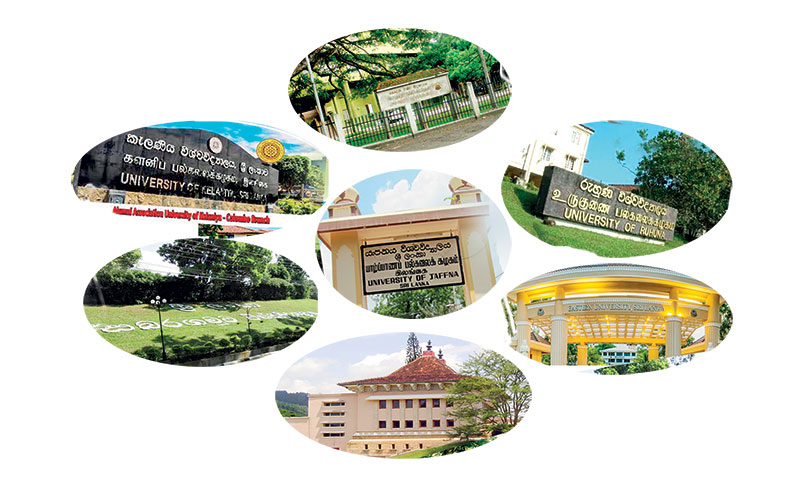
Sri Lanka’s state university system, long celebrated as the crown jewel of the nation’s free education policy, is currently navigating one of the most perilous periods in its modern history. What was once envisioned as a reliable engine for social mobility and intellectual leadership is now burdened by severe operational deficiencies that threaten its fundamental integrity. The recent decision by the Federation of University Teachers’ Association (FUTA) to stage a trade union action, following a week of growing unrest, serves as an urgent wake-up call to the state. As academic staff across campuses raise their voices, it becomes clear that the public higher education framework is arriving at a critical point where political ambitions are colliding head-on with stark institutional realities.
At the heart of the current crisis lies a staggering shortage of qualified academic staff across state universities. Senior Lecturer Charudatta Ilangasinghe, Secretary of FUTA, highlighted a key issue: Sri Lankan state universities are experiencing an unprecedented deficit of adequately qualified lecturers. Driven by economic hardship, rapid inflation, and institutional uncertainties, an escalating brain drain has seen seasoned academics, senior professors, and specialised researchers leave the country in alarming numbers. Higher education cannot exist merely through physical lecture halls and administrative offices; its core strength depends on human capital. When specialised departments lack qualified educators, degree programmes lose rigour, research capacity plummets, and the overall educational experience deteriorates.
This academic depletion has severe consequences for school leavers who have worked hard to secure university admission. The gravity of this bottleneck becomes stark when examining official metrics from the University Grants Commission (UGC). Annually, around 160,000 to 170,000 students qualify for university education after sitting for their G.C.E. Advanced Level examinations, yet the state university network possesses the capacity to absorb only roughly 42,000 to 45,000 candidates—leaving nearly 73% to 75% of qualified students without a public university seat.
The current staff shortages further restrict this already narrow bottleneck. According to figures raised by the Federation of University Teachers’ Association (FUTA), the state university system operates under an approximate 50% deficit in academic personnel—possessing only around 6,500 to 6,900 lecturers against an approved requirement of 13,000 to 14,000 positions. Over 1,500 senior academics and PhD holders have migrated in recent years due to economic pressure, severely understaffing high-demand faculties like Medicine, Engineering, and Information Technology.
Consequently, student batches—including those who sat for the 2025 G.C.E. Advanced Level examinations—face academic backlogs and delays exceeding 12 to 18 months before registration and commencement. For generations, passing the Advanced Level examination was viewed as a clear path toward personal advancement and professional development. Today, that milestone is met with systemic bottlenecks, placing the academic futures of young citizens in jeopardy and creating downstream disruptions across vital professional sectors.
To successfully scale the higher education landscape, while ensuring that existing standards do not decline, education secretaries and administrative leaders must prioritise actionable short-term measures alongside their overarching long-term expansion goals. Rather than treating expansion and quality control as separate initiatives, immediate interventions can immediately reinforce current university infrastructure and create an environment capable of supporting larger student bodies in the future. By focusing on international collaboration, targeted capacity building, and structured retention frameworks, educational systems can quickly elevate teaching quality and administrative efficiency.
A crucial short-term initiative involves forging direct academic and research partnerships with established international universities. These linkages allow local institutions to immediately implement faculty exchange programmes and collaborative training workshops, bringing global pedagogical standards and technical expertise directly to local staff. To further accelerate this professional growth, the government can institute fully funded scholarships targeting top-tier international institutions, particularly across the United Kingdom and the United States of America. Sending promising academics abroad equips them with modern research methodologies, administrative capabilities, and domain knowledge that can be directly integrated into the local curriculum upon their return.
To ensure that these foreign training investments yield tangible domestic benefits, institutions must pair scholarship opportunities with enforceable bonding policies, a model effectively utilised by nations such as Thailand and China. Under these agreements, scholars commit to returning home immediately following their studies to serve at local universities for a mandatory multi-year period. This contractual obligation prevents brain drain, guarantees a continuous pipeline of highly trained educators back into the local system, and builds a sustainable, highly qualified workforce capable of driving long-term educational growth.
The academic staffing crisis in Sri Lanka’s state university system spans virtually all fields, but the acute deficit of qualified lecturers is most heavily felt in professional, STEM, and high-demand specialised disciplines. According to reports from the Federation of University Teachers’ Association (FUTA), the faculties experiencing the most severe disruption include Medicine, Engineering, Information Technology, Management, and the Natural Sciences.
Some faculties facing critical challenges
Medical, Dental, and Allied Health Sciences faculties face a critical challenge. These disciplines operate under strict mandatory teacher-to-student ratios, such as a one-to-five ratio in clinical specialties like Dental and Veterinary Medicine, to ensure patient safety and maintain global accreditation. With senior medical consultants, clinical specialists, and professors departing due to high international demand and overseas career opportunities, these faculties struggle to maintain basic clinical training schedules and research supervision.
Engineering and Technology faculties are similarly affected by the departure of senior academic staff holding doctorates. Fields such as Civil, Electrical, Mechanical, and Computer Engineering require specialised expertise that cannot be easily replaced by junior recruits. In Information Technology and Software Engineering, state universities face double pressure from foreign university recruitments and lucrative private sector job markets, making it difficult to maintain required ratios such as one lecturer for every 10 students.
Management and Commerce faculties, which accommodate some of the largest undergraduate student cohorts, also confront severe human resource deficits. At institutions like the Rajarata University, student unions have reported shortages of up to 45% to 50% in academic cadre across management departments. The absence of qualified professors in fields like Accounting, Finance, and Business Analytics has created bottlenecks in student research supervision and delayed final-year graduations.
Natural Science faculties—encompassing Mathematics, Physics, Chemistry, and Molecular Biology—face a parallel crisis. The loss of experienced research supervisors affects advanced laboratory teaching and postgraduate study programmes. Overall, the primary issue across these professional fields is not merely a quantitative shortage of entry-level staff, but the loss of senior, highly qualified academics whose departure directly threatens course accreditation, clinical training, and the long-term credibility of university degrees.
Despite these crippling internal challenges, political discourse continues to emphasise rapid physical expansion over institutional consolidation. Proposals to establish 50 new state universities may sound visionary on a political platform, but they risk ignoring the foundational crisis existing on the ground. FUTA’s opposition to this unbridled expansion highlights a crucial operational reality: establishing new institutions while existing ones collapse from resource starvation is fundamentally unsustainable. Spreading already scarce financial resources, infrastructure budgets, and qualified faculty across dozens of new campuses will only dilute academic standards across the board.
Before any ambitious expansion plans are drawn up, the government must prioritise stabilising, staffing, and modernising the existing 17 state universities. Quality assurance must take precedence over political expediency. A university is defined not by its name or physical structures, but by the caliber of its academic standard, the depth of its research, and the expertise of its teaching staff. Establishing new universities without first recruiting, training, and retaining qualified lecturers across the current 17 state universities risks creating institutions that exist in name only.
Resolving this crisis requires moving past temporary measures and engaging in meaningful, long-term dialogue with academic stakeholders. A permanent solution demands a dedicated policy effort aimed at making state universities attractive environments for academic professionals once again. This involves restoring competitive conditions, providing robust research support, ensuring institutional autonomy, and prioritising funding for existing faculties before diverting capital elsewhere. Crucially, restoring competitive conditions requires an immediate and comprehensive restructuring of the academic salary framework. The current compensation model has rendered state universities severely uncompetitive, failing to benchmark remuneration against international and regional academic standards. To stem the relentless brain drain of doctoral degree holders and senior researchers, the salary structure must be revised to reflect global academic pay scales. Without offering remuneration that aligns with international benchmarks, Sri Lankan public universities will continue to lose their finest scholars to overseas institutions and private sectors, leaving faculties understaffed and compromising the long-term credibility of higher education in the country.
Beyond compensation, the daily operational realities of academic staff at regional universities require urgent institutional intervention. A primary bottleneck in retaining senior scholars at regional campuses is the lack of dedicated, quality housing on premises. Currently, many lecturers endure grueling daily commutes from Colombo to regional universities—a practice that proves physically exhausting, economically burdensome, and disruptive to academic productivity. The underlying reason many academics refuse to relocate closer to these regional institutions is the lack of high-quality schooling options for their children in peripheral areas. Providing modern, comfortable residential quarters directly within university campuses would offer a practical solution to this structural dilemma. By establishing secure, well-equipped housing on site, universities can reduce the reliance on long commutes, foster a vibrant, resident academic community, and ensure that senior scholars remain engaged in campus life, research, and student mentorship.
The state university system remains one of Sri Lanka’s most vital national assets, but its survival depends on addressing its core structural issues today rather than chasing hollow expansion tomorrow.
Source: The Island