Africa is buying: Sri Lanka must start selling
A call to Sri Lankan exporters and agencies: Can Sri Lanka compete with China and India in Africa?
· Sri Lanka
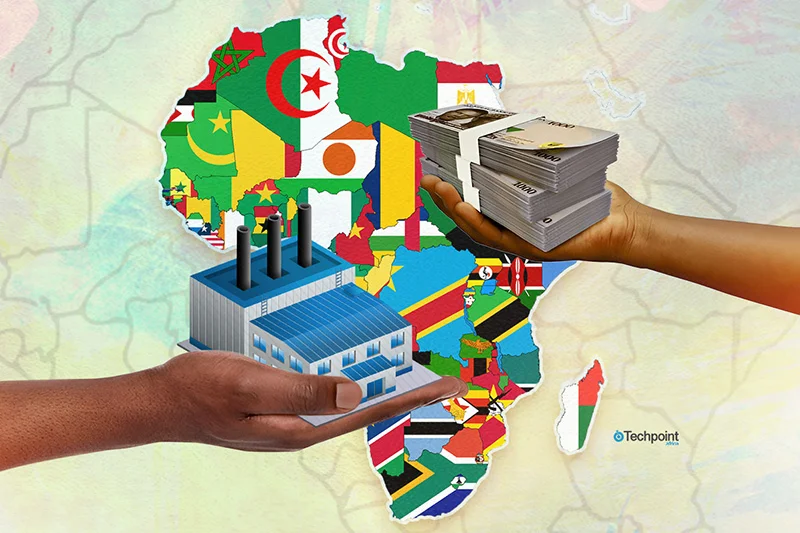
Sri Lanka has spent decades concentrating its exports on traditional markets in Europe, North America and Asia. Yet across the Indian Ocean lies a rapidly expanding market that remains significantly underdeveloped by Sri Lankan exporters: Africa.
The opportunity is not theoretical. Sri Lanka already exports packaging, textiles, rubber products, pharmaceuticals, paper, machinery and electrical goods to African markets. The question is whether these modest beginnings can be transformed into a serious export strategy—and whether Sri Lanka can compete against the enormous commercial presence of China and India.
The answer is yes—but Sri Lanka must compete differently.
Sri Lanka exported approximately US$32.08 million to Kenya in 2025, while importing US$11.41 million. But US$32 million is tiny compared with the opportunity: Kenya imported more than US$24 billion in 2025. Even a 1% share of that market would represent nearly US$240 million in annual exports.
And the commercial base already exists. Sri Lanka’s 2025 exports to Kenya included approximately US$9.99 million in paper and paperboard products, US$9.73 million in knitted fabrics, US$3.64 million in pharmaceuticals, US$1.24 million in rubber products and US$1.20 million in machinery.
Kenya’s import structure is equally revealing. In the third quarter of 2025, industrial supplies represented 34.4% of imports, machinery and capital equipment 19.2%, food and beverages 9.0%, and consumer goods 7.3%. The opportunity for Sri Lanka, therefore, extends well beyond consumer goods—we can become a supplier to African industry.
But competition is fierce. Asia supplied around 70% of Kenya’s imports in 2025, with imports from China rising 16.5% and those from India 11.3%.
Sri Lanka cannot challenge China and India across every product category. Nor should it try. We must target sectors where quality, specialisation, reliability, technical capability, smaller production runs and flexibility matter more than simply offering the lowest price.
Packaging is an obvious starting point. Cartons, boxes, bags and labels are already among Sri Lanka’s exports to Kenya. Importantly, some Sri Lankan companies operating in Kenya are themselves importing these products from Sri Lanka. The market already exists; the challenge is to scale it.
As Africa’s food-processing, pharmaceutical, apparel and consumer-goods industries expand, demand for sophisticated packaging will grow with them. Sri Lanka already possesses the manufacturing capability and industry experience to capture a larger share.
Industrial rubber products, tyres, gloves and specialised rubber components offer another opportunity where Sri Lanka has established manufacturing expertise.
The apparel supply chain is equally promising. Rather than competing directly with African garment factories, Sri Lanka can supply fabrics, elastics, labels, packaging and specialised textile inputs.
Some Sri Lankan apparel manufacturing and export companies already established in Kenya, Togo, Ghana and Ethiopia are importing several of these inputs from Sri Lanka. The supply chain, therefore, already exists. The next step is to move beyond supplying Sri Lankan-owned factories and become a competitive input supplier to the wider African apparel industry.
Other sectors deserving systematic market development include pharmaceuticals and medical consumables, processed foods, biscuits and confectionery, coconut products, cinnamon and spices, electrical products and cables, industrial chemicals, ceramics, light engineering, agricultural equipment and food-processing machinery.
Sri Lanka should also look beyond physical goods. IT, fintech, banking technology, engineering, healthcare, hospitality management and professional services largely escape the freight disadvantage confronting merchandise exports.
The Tariff Problem Can Become an Opportunity
Market access cannot be discussed without tariffs.The East African Community applies a Common External Tariff with bands of 0%, 10%, 25% and 35%, while certain sensitive products attract still higher protection. Simply filling containers in Colombo with finished consumer goods will therefore not always be commercially competitive.
But that obstacle points towards a bigger opportunity: manufacture in Africa.
Sri Lankan businesses could export intermediate materials while undertaking final assembly, manufacturing, processing or packaging in Kenya. Packaging companies could establish converting plants; electrical manufacturers could assemble locally; pharmaceutical companies could explore manufacturing or packaging partnerships; and food companies could undertake final processing closer to consumers.
Kenya would then become more than an export destination. It could become Sri Lanka’s manufacturing and distribution gateway into East and Central Africa.
With the East African Community now comprising eight partner states and extending geographically from the Indian Ocean towards the Atlantic, establishing a regional presence is increasingly more important than viewing each African country in isolation.
Sri Lanka simultaneously needs a West African strategy.
Ghana offers potential as an English-speaking commercial gateway and host of the AfCFTA Secretariat. Nigeria, with its enormous population and consumer economy, should be approached as a major market in its own right, despite its greater regulatory, currency and operational complexity.
ECOWAS tariff bands of 0%, 5%, 10%, 20% and 35% again make product selection critical. Sri Lanka should concentrate on products with sufficient differentiation and margins to absorb freight, tariffs and distributor costs.
Pharmaceuticals demonstrate both the opportunity and the challenge. Nigeria imported approximately US$766 million in pharmaceuticals in 2025, with India supplying roughly US$394 million and China US$131 million. Ghana imported approximately US$301 million, with India supplying about US$140 million.
Sri Lanka cannot simply offer another generic product and expect to beat India on price. We must identify specialised products, reliable supply arrangements, partnerships and, where commercially justified, local production or packaging.
Stop Promoting Sectors—Identify Products
Sri Lanka now needs an Africa Export Opportunity Study based on individual products, not broad sectors.
The Export Development Board, Foreign Ministry, chambers and private sector should jointly identify 15–20 priority products. For each product, Sri Lanka should calculate the HS code, African annual import demand, principal suppliers, Chinese and Indian market shares, applicable duties, freight from Colombo, regulatory requirements, distributor margins and final landed price.
That will tell us where Sri Lanka genuinely has a competitive advantage.
Before spending resources promoting a product, apply one simple test:
African import demand + Sri Lankan production capability + tariff + freight + distributor margin + regulatory cost = final landed competitiveness against China, India and local African production.
Only products that pass this test should receive concentrated export-promotion resources.
This would move Sri Lanka away from exhibitions, delegations and general discussions towards what ultimately matters: specific products, specific buyers, specific distributors and actual export orders.
Commercial diplomacy must become results-driven. The Government should set clear annual trade and investment targets for every Sri Lankan mission in Africa.
Missions should be evaluated not merely on diplomatic activity, but on buyers and distributors identified, business introductions made, investments facilitated, market barriers resolved and measurable exports generated.
In a competitive Africa, our missions must become active economic frontlines not merely diplomatic outposts.
A practical strategy could operate through three commercial gateways: Nairobi for East and Central Africa, Accra for selected West African markets and Lagos for Nigeria.
Sri Lanka’s total exports of goods and services reached approximately US$17.25 billion in 2025. Capturing even a small additional share of Africa’s enormous import market could, therefore, make a meaningful contribution to export earnings, investment and foreign-exchange generation.
Sri Lankan exporters must stop looking at Africa as a distant or difficult market and start treating it as a strategic growth market.
We cannot compete with China and India on scale, but we can compete on quality, specialisation, flexibility and reliability. Exporters must identify country-specific opportunities, establish strong local distributors, build partnerships with African businesses and use Sri Lankan companies already operating on the continent as gateways into regional supply chains.
Where freight and tariffs weaken competitiveness, businesses must be prepared to move towards local assembly, joint ventures and manufacturing in Africa. Exporters cannot do it alone. They need aggressive, measurable and results-driven commercial diplomacy from Sri Lanka’s missions.
Africa is buying. Its markets are being captured now. Sri Lanka must stop watching from the sidelines. We must enter, compete, build our presence and secure our share.
(Ambassador Kana Kananathan is a businessman, Diplomat, lobbyist and an expert in African affairs, with over four decades of experience on the African continent. A long-time resident of Africa, he served as Sri Lanka’s envoy to Uganda and Kenya, with concurrent accreditation to 22 African Nations, and was the permanent representative to UN Habitat and UN environmental Programme. Over the years, he has been the Elections Monitor across the continent, working closely with African governments, and built enduring partnerships with African leaders. He also served as Economic and Investments Advisor to former President Professor Alpha Condé of the Republic of Guinea)
Source: The Island