Thileepan’s fast unto death: An authentic narrative that many missed
· Sri Lanka
Tamil political parties and politicians are seeking political advantage over the death of Thileepan. Last year, organisers of Thileepan commemoration prevented Fisheries, Aquatic and Ocean Resources Minister Ramalingham Chandrasekaran from entering the Thileepan memorial in Nallur. In spite of being a Minister, Chandrasekaran couldn’t enter the premises. The NPP National List lawmaker made the abortive bid on 17 Sept., 2025, the third day of the 12-day commemoration.
Would he risk being snubbed for a second consecutive year? At the time the Thilipeen commemoration started, on 15 Sept., Chandrasekeran had been away in China and he returned to the country over the weekend.
Commemorative events held at the newly installed bronze statue of the late Rasiah Parthipan, alias ‘Lt. Colonel’ Thileepan at Nallur, Jaffna, caused controversy. A section of the Opposition accused the NPP government of encouraging separatist movement by turning a blind eye to the growing hero worship of an LTTEer.
The unveiling of the statue took place on 15 Sept., the day the Tiger launched his fast unto death, in 1987, to become a hero in the eyes of his equally misled community. At the time of his death, at the Nallur Hindu Temple, on 26 Sept.,1987, Thileepan was 23-years-old.
The controversial commemoration will continue till 26 September, 2026. The SLPP led the attack against the backdrop of accusations that the former ruling party promoted the LTTE ideology, by accommodating maverick Jaffna District Independent lawmaker Dr. Ramanathan Archchuna, a truly qualified medical doctor on its political platform. Dr. Archchuna also never shies away from calling a spade a spade, irrespective of any consequences.
Almost four decades after his death, controversy still surrounds the circumstances leading to the former Jaffna Hindu College student, and Jaffna University undergraduate, launching the fast unto death.
Jaffna Monitor, in a story headlined ‘Jaffna Begins 39th Commemoration of Thileepan’s Fast,’ posted this month, dealt with Thileepan’s fast. Let me reproduce the relevant section: “His fast followed the Indo-Lanka Accord of July 1987, under which Indian troops were deployed to the north as a peacekeeping force. On Sept. 13, 1987, the LTTE handed the Indian High Commission a letter setting out five demands: the release of Tamils held under the Prevention of Terrorism Act and emergency regulations; an end to Sinhalese settlement in Tamil areas carried out in the name of rehabilitation; a halt to all such rehabilitation work until an interim administrative council is established; an end to the construction of police stations in the Northern and Eastern Provinces; and the disarming of government-armed home guards, together with the withdrawal of the army and police from schools. The demands were addressed to New Delhi on the reasoning that India alone could compel Colombo to act. No reply came.” https://www.jaffnamonitor.com/featured/jaffna-begins-39th-commemoration-of-thileepans-fast/
But, ex-LTTE combatant Niromi de Soyza (not her real name) in her internationally acclaimed ‘Tamil Tigress’ disclosed what transpired at a meeting (p 142) chaired by Thileepan himself at a place called Freedom Birds’ head office where he declared the LTTE’s determination to force the Indian Army to leave Sri Lanka. Declaring that those who served the group’s political wing didn’t get an opportunity to show their commitment to the organisation, he had vowed to go ahead with fast unto deaths, regardless of the consequences. Soyza, who had been assigned to the group responsible for crowd control at the fast unto death site, quoted Thileepan as having said at the previously mentioned meeting: “This is my chance. I’m optimistic it will achieve something, whether I live or die. We must force the Indians out of our land.”
The author of “Tamil Tigress’ who had been among those who received her first assault rifle and cyanide capsule from Thileepan questioned the (Chapter 9: There’s still time to change your mind) as to why Velupillai Prabhakaran chose physically fragile Thileepan to undertake the fast unto death.
According to Soyza’s narrative, the fast unto death had been directed at the Indian Army. Referring to the Nallur hunger strike 39 years ago, Soyza said that lyrics of all songs played therein expressed the same sentiments. In her own words, Thilpeepan’s dying wish was to see the foreign army, the IPKF (Indian Peace Keeping Force) defeated.
Sri Lanka never really examined at least key events that shaped the war in the North-East. Successive governments lacked political will to meticulously scrutinise events thereby setting the record straight. Over the years various interested parties have been successful in promoting false narratives, pertaining to key events. Thileepan’s fast unto death is a case in point.
Thileepan’s fast unto death, or slow suicide, created the background for the LTTE-IPKF war. The war erupted just two weeks after Thileepan’s death. Those propagating false narratives have conveniently forgotten that the crux of the matter is the fact that the LTTE didn’t hand over its weapons as envisaged in the Peace Accord signed on 29 July 1987. All Tamil terrorist groups were to be disarmed within 72 hours after the signing of the accord. India failed in one of its primary responsibilities.
The much publicised weapons handover that took place in Jaffna was a farce. Perhaps, the top IPKF command knew of the LTTE strategy but chose to turn a blind eye. The consequences were devastating. The memorial put up by Sri Lanka, in 2008, for the IPKF, at Battaramulla, is a stark reminder of the war caused by the LTTE. Had it accepted the Indo-Lanka Peace Accord, as previously agreed, there wouldn’t have been the fast unto death undertaken by Thileepan and a bronze statue or a memorial for the IPKF.
The LTTE had been hell-bent on eradicating other Indian-sponsored former Tamil terrorist groups, as well as taking on the Indian Army. Prabhakaran had been so over confident of his group’s military prowess, he created an extremely hostile environment conducive for war. Having deceived the governments of India and Sri Lanka regarding the surrendering of armaments in line with the peace accord, Prabhakaran, apparently engineered Thileepan’s slow suicide. ‘Tamil Tigress’ author who personally knew Prabhakaran and Thileepan emphasised that point quite clearly. The bottom line is that Thileepan’s demise had been a tool in Prabhakaran’s hands who brazenly manipulated the Jaffna community. Prabhakaran used Thileepan’s needless agonising death to maximise the overall LTTE strategy. The LTTE wanted an excuse to resume hostilities. Obviously, he was quite successful in creating an environment conducive for war. Don’t forget that Thileepan launched his fast unto death six weeks after the deployment of the Indian Army in Northern and Eastern Sri Lanka.
The surrender of arms, arranged at Suthumalai sportsground on 4 August, 1987, with the presence of the media, was meant to underscore the end of the conflict. But the ‘Tamil Tigress’ author, who had been present at the arms surrender, revealed in her memoirs how Prabhakaran expressed suspicion of the peace accord. According to her, on the night of 4 August, 1987, she was among those addressed by Prabhakaran, his first interaction with LTTE cadres following his Suthumalai sham weapons surrender to fool the fools. Soyza quoted Prabhakaran as having told them: “All our good ammunition was stashed prior to the surrender. We’ll continue to hand over the rest.” She also quoted Prabhakaran as having declared: “War will resume in a month or two.”
Close on the heels of a group of LTTE cadres taking their lives after being apprehended by the Navy in the first week of Oct., 1987, the author of ‘Tamil Tigress’ quoted Prabhakaran as having alleged India engineered the peace process as a plot to gradually eliminate them. The LTTE leader had obviously forgotten if not for India they wouldn’t have achieved powerful military status. India not only armed the Tamil terrorists, but also granted them freedom to conduct operations across the Palk Strait. The Indian Navy looked the other way when terrorists, wounded in combat with the Sri Lankan military, were moved across the short passage to receive treatment in Tamil Nadu hospitals.
The suicide of LTTE cadres, including the then Jaffna commander ‘Lt. Col.’ Kumarappa, and Trincomalee commander ‘Lt. Col’ Pulendran, boosted Prabhakaran’s strategy. Those propagating false narratives tend to forget that Prabhakaran smuggled in cyanide capsules into Palaly air base where the 17 personnel were held. In a way, the slow death of Thileepan, and mass suicide of LTTE cadres, all were engineered by Prabhakaran himself. Those demanding accountability on the part of Sri Lanka never bothered to examine Prabhakaran’s murderous plots.
Indian Defence Minister Rajnath Singh, during his recent visit here, paid a floral tribute to the IPKF memorial, at Pelawatte, Battaramulla. It would be pertinent to mention that the construction of the memorial was completed in 2008. The late General Lionel Balagalle, in his capacity as the Commander of the Army and Chief of Defence Staff, proposed a memorial for IPKF, following a visit to New Delhi in Dec., 2003. What made Balagalle propose a memorial for the IPKF, knowing very well India destabilised Sri Lanka and the introduction of the foreign Army by way of arm twisting the then government, headed by JRJ, was not appreciated, under any circumstances. He, like many of us, however realised we had to make peace with our giant overbearing neighbour, irrespective of whether we liked it or not, in order to co-exist.
The destabilisation of a friendly country had been in line with their overall strategy to deploy its Army to ensure the installation of an administration loyal to New Delhi. India went to the extent of forming a force called Tamil National Army (TNA) during the period leading to the withdrawal of the IPKF in March 1990. Having joined The Island editorial as a novice, in June 1987, the writer had the opportunity to cover the last Indian troop carrying vessel leaving Trincomalee port on the afternoon of 24 March, 1990 (The IPKF is off, The Sunday Island, 25 March, 1990). India violated Sri Lanka airspace on 4 June to air drop 25 tonnes of food and medicine over Jaffna peninsula without anyone’s permission here, which came to be sarcastically termed the ‘parippu drop’, just three days after I joined The Island.
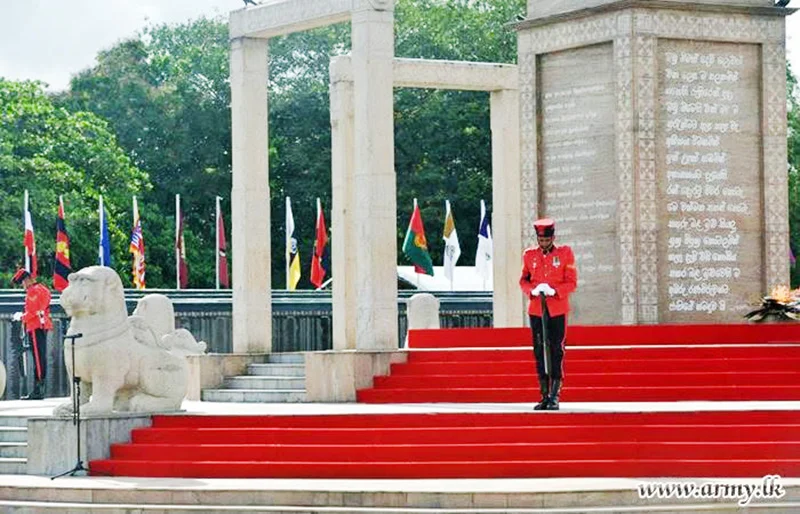
While honouring the IPK with a memorial in which 1069 names of its officers and men killed in the Lankan misadventure inscribed, since the end of the war, in May 2009, Sri Lanka played politics with the defeated LTTE. The Thileepan’s statue is a case in point. The installation of a new bronze statue of Thileepan, who died in a fast unto death against India demanding the withdrawal of the IPKF, soon after the Indian Defence Minister paid floral tribute to the IPKF memorial, highlighted Sri Lanka’s continuing dilemma.
The ruling NPP under any circumstances cannot risk antagonising the Tamil electorate, or the Tamils living overseas, by clamping down on events, such as the Thileepan commemoration. Having won all electoral districts in the predominantly Tamil speaking Northern and Eastern Provinces at the presidential and parliamentary polls, in 2024, and done well at the Local Government polls of May 2025, in the same regions, the NPP may have bent backwards to avoid confronting organisers of such events.
The intervention made by police at Nallur, on 18 Sept., 2026 .should be considered as a measure to counter accusations that the government promoted separatist sentiments. Police disrupted the public address system claiming that the organisers didn’t obtain permission to use speakers. But, the commemorations continued not only in Nallur but in Batticaloa as well.
The undeniable truth is all political parties, represented in Parliament, played ball with the LTTE, during the conflict and after, hence the song and dance will continue. The reality is Prabhakaran staged Thileepan’s slow death and engineered mass suicide at the Palaly air base in Sept. and Oct. 1987 to plunge the country back into war. Therefore, the country should be wary of those propagating and promoting false narratives in support of their despicable political agendas. The issue is whether Thileepan willingly sacrificed his life to help Prabhakaran implement his strategy or was used as a tool. If Soyza’s narrative is accurate Thileepan had been chosen from among a large group of volunteers who accepted the challenge. There is no doubt fast unto death must have been Prabhakaran’s brainchild as much as the Palaly mass suicide was. What made Prabhakaran believe that he could overwhelm the Indian Army, at that time numbering over 1.1 mn and was considered the fourth largest with the Soviet Union, China and the US maintaining far bigger land forces?
During the Indian Army deployment that began in July/August, 1987, the strength was around 10,000 officers and men. Their mission was to ensure implementation of the ceasefire and disarming of terrorist groups. But, when Prabhakaran executed a group of Sri Lankan soldiers in their custody following the mass suicide at Palaly airbase on Oct. 5, 1987, and fighting erupted a week later, India had no option but to bring in additional forces. At the peak of their deployment here the total strength including the Navy and Air Force units, reached 100,000.
It is a paradox that a section of the Tamil community commemorated Thileepan after having voted for warwinning Army Commander General (retd.) Sarath Fonseka at the 2010 presidential election. In spite of Fonseka suffering a humiliating defeat, he won all predominantly Tamil speaking districts. Tamils, including recipients of foreign citizenship, annually commemorate various LTTE events. ‘Black Tiger Day’ on 5 July, the day Vallipuram Vasanthan, known by the nom de guerre Captain Miller, mounted a suicide attack on troops of ‘Operation Liberation,’ based at the Nelliady Central College, is one such event. That was the time between the infamous Indian airdrop and the signing of the so-called Indo-Lanka peace accord that was done under the threat of direct Indian military intervention.
What made the community that still considered Thileepan as a hero to vote for Fonseka who mercilessly brought the war to an end? What made lawmaker Archchuna, who still venerated Prabhakaran, to join Mahinda Rajapaksa on the SLPP platform? Thileepan would have turned in his grave if he saw how the community behaved. Nothing could have offended him or Prabhakaran than the Illankai Thamil Arasu Kadchi (ITAK)-led Tamil National Alliance (TNA) joining hands with the UNP and the JVP to field Fonseka as the common candidate at the 2010 presidential election.
The TNA consisted of former Indian funded terrorist groups TELO, PLOTE and EPRLF, in addition to the ITAK, had no qualms in promoting Fonseka’s candidature after having accused his Army of gross human rights violations. The Tamil electorate had no qualms in choosing Fonseka over Mahinda Rajapaksa, who sought political consensus with the LTTE as a last bid to end bloodshed before unleashing the armed forces on an all-out assault, within our limited means, to defeat uncompromising Tiger terrorists.
Sri Lanka pathetically failed to set the record straight. The worst offender is President Rajapaksa himself. His administration could have done much more to explain the developments leading to all-out war. Instead, the first post-war Rajapaksa government squandered that opportunity. Its pathetic failure helped those who couldn’t stomach the LTTE’s defeat to propagate war crimes accusations with the help of the conniving West, which, unfortunately, included the United Nations organs like the UNHRC, controlled by them.
While the top Sri Lankan military and political leaderships were held accountable for unsubstantiated war crimes allegations, with the US, the UK and Canada declaring targeted sanctions against former Presidents Mahinda Rajapaksa and Gotabaya Rajapaksa as well as Admiral of the Fleet Wasantha Karannagoda, General Shavendra Silva et al. Australia found fault with strategist Maj. Gen. Chagie Gallage for taking command, post-war command, of 59 Division that played a significant role in eradicating the LTTE. Gallage was denied a visa during the Yahapalana administration. When this writer raised the relentless Western attacks on wartime Sri Lankan leadership at a media briefing called by the Foreign Ministry in Sept., 2022, the then Foreign Minister Ali Sabry, PC, said that entire divisions deployed on the northern front had been blacklisted.
While Indian dignitaries paying their respects at the IPKF memorial seemed to have received public acceptance, last year the NPP government created unprecedented controversy ahead of the May 2025 commemoration when the Defence Ministry announced President Anura Kumara Dissanayake wouldn’t attend the 16th ‘War Heroes’ commemoration ceremony. The declaration triggered a massive political backlash. President Dissanayake was compelled to reverse his decision. The JVP and NPP leader, who also holds the Defence portfolio and the post of Commander-in-Chief of the armed forces, attended the event. This year there was no controversy. Whatever the JVP/NPP political stand, the President cannot, under any circumstances, shun the annual war heroes’ commemoration.
The armed forces eradicated JVP terrorism twice in 1971 and 1986/87 to 1990. They defeated the conventional military and terrorist challenge posed by the LTTE. Whatever the ungrateful opportunists and Western-funded NGO hacks write, the armed forces triumph over the LTTE is the single most important post-independence achievement. The eradication of the JVP challenge that almost overwhelmed the UNP government in the late 80s, too, is equally important and had the armed forces failed at the time, the country could have ended up in far worse chaos. The bottom line is that the eradication of the LTTE couldn’t have been achieved if the UNP didn’t triumph over the second JVP-inspired terror campaign. That is the undeniable truth. It would be unfair by the JVP if we didn’t mention that the UNP too drove the JVP to take up arms in the 80s by proscribing the party over the 1983 anti-Tamil violence, though it was not responsible for the breakdown of law and order, countrywide, when UNP goons went on the rampage against innocent Tamils, especially in Colombo. The postponement of scheduled parliamentary elections by six years to 1989, after holding a sham referendum by the JRJ government, too, contributed to the war in the North, and terrorism in the South.
Source: The Island