Teachers’ Union Raises Concerns Over Recruitment Exam Results, Calls for Transparency
· Sri Lanka
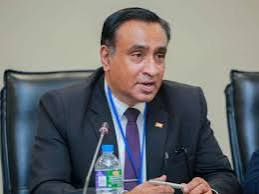
The United Teachers’ Services Union has raised concerns over the recently released results of the teacher recruitment examination, calling on the government to ensure transparency in the recruitment process and release the results and marks of all candidates.
Speaking at a media briefing on October 19, Amila Sandaruwan, General Secretary of the United Teachers’ Services Union, said the delay in releasing the results and the lack of detailed information had created uncertainty among candidates, including unemployed graduates and development officers currently serving in schools.
He said the examination had been conducted to recruit 23,000 teachers through open and limited recruitment schemes. Although the results were expected in early September, they were released only in the middle of the month, after a considerable delay.
According to Sandaruwan, 4,123 candidates had reportedly passed under the limited recruitment scheme, while 46,808 had passed under the open scheme. However, he questioned why the results of only some successful candidates had been released and why individual examination marks had not been disclosed.
He stressed that candidates who had paid an examination fee of Rs. 2,600 should be entitled to know their marks. He called on the authorities to publish the results of all candidates and establish a clear, transparent process for conducting interviews and making appointments.
The union also questioned how recruitment would be carried out in different stages, when subsequent rounds would take place, and how many teachers would be appointed to national schools under the central ministry and schools administered by provincial councils.
Sandaruwan said the government should clarify whether all successful candidates would be called for interviews and explain the criteria that would be used to select those appointed.
He further called for the recruitment of more teachers, stating that filling 23,000 vacancies alone would not be sufficient to address the teacher shortage. He suggested recruiting at least an additional 5,000 teachers, subject to the availability of qualified candidates.
Addressing the situation of development officers serving in schools, he said many had been involved in teaching for approximately five years and were awaiting clarity on their future employment. He said uncertainty over their recruitment had created difficulties for both the officers and school principals, particularly in rural and underprivileged areas.
He noted that some schools relied heavily on development officers to conduct classroom teaching, with certain schools having only one permanent teacher. He warned that the continuing uncertainty and shortage of teaching staff would ultimately affect schoolchildren, particularly those in rural and economically disadvantaged communities.
The union also emphasised the need to recruit unemployed graduates to fill vacancies in subjects such as Mathematics, Science, English and Aesthetic Studies. Sandaruwan argued that recruiting development officers alone would not adequately address shortages across the education system.
He further warned that the teacher shortage could worsen as more teachers retire in the coming months. He called on the government and relevant education authorities to assess existing vacancies, obtain updated information from zonal education offices and prepare for future staffing requirements.
According to Sandaruwan, the government should prioritise addressing staffing shortages before implementing further education reforms. He also criticised proposals that could involve closing smaller schools or reducing subjects, arguing that such measures would not provide a sustainable solution to the problem.
The union reiterated its call for the immediate release of all examination results and marks, a clear recruitment timetable, fair consideration for qualified school development officers, and increased recruitment of eligible graduates.
Sandaruwan said resolving the issue was essential not only for job seekers but also for protecting the right of children across the country to receive a quality education.
Source: Serendib News