Sri Lankan Singers Call for Government-Backed System to Collect and Distribute Music Royalties
· Sri Lanka
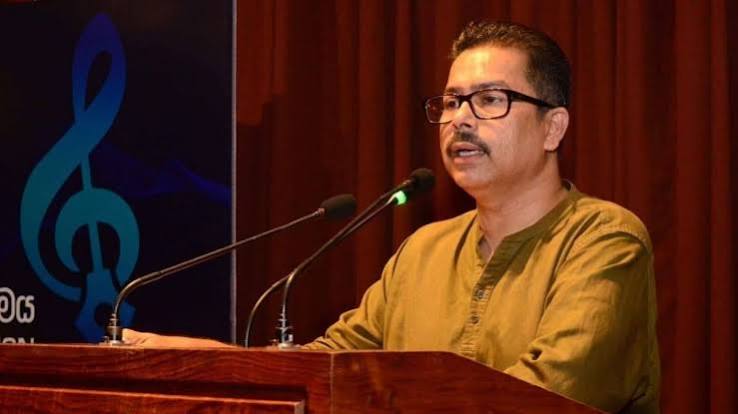
The Sri Lanka Singers’ Association has called for the establishment of a government-backed company to collect and distribute music royalties, raising concerns over transparency, auditing and payments to artists under the existing system.
Speaking at a media briefing on Tuesday, association president Jagath Wickramasinghe said the association was not opposed to the payment of royalties but wanted a fair and transparent mechanism that ensured the money reached the rightful creators and performers.
He proposed establishing a company in partnership with a state institution to bring stakeholders under one system and address disputes over royalty collection and distribution.
Wickramasinghe said a committee appointed in 2018 had unanimously recommended that royalty rights should not be vested exclusively in a single individual or company. He also argued that copyright law needed amendments, noting that the existing legal framework recognised songwriters and composers as copyright holders but did not adequately recognise performers in the same way.
Questions Over Royalty Collections and Financial Transparency
Wickramasinghe alleged that companies registered to collect royalties had failed to make the relevant payments to singers, despite collecting money for the use of music.
He said the association had requested information under the Right to Information Act to establish whether royalties were being distributed correctly but had not received the requested information.
He also raised concerns about the financial records of companies involved in royalty collection, claiming that requests for audit reports had gone unanswered.
According to Wickramasinghe, approximately Rs. 8 million should currently be held by one of the companies involved in the process. He questioned how much money had been collected overall and whether the funds had been properly distributed.
He said complaints had been lodged with the National Intellectual Property Office regarding the matter. He also referred to complaints made to the relevant anti-corruption authorities and the Ministry of Trade over concerns about the handling of royalty funds.
The association further questioned the collection of a Rs. 10,000 royalty fee for a song performed at a concert in Colombo, raising concerns about how the charges were calculated and how the proceeds were subsequently distributed.
Association Seeks Audit Reports and Changes to Collection System
Wickramasinghe said the association had requested an audit report from Acquiesce Excel, but alleged that the report had not been provided.
He compared Sri Lanka’s arrangements with practices in other countries, saying that royalty charges elsewhere could be calculated as a percentage of ticket sales, with refunds provided under certain circumstances if an event did not reach the required attendance.
He argued that Sri Lanka needed a system with clear rules governing charges, refunds, financial reporting and the distribution of royalties.
Wickramasinghe also claimed that rights associated with songs he had written, including songs written for him by his mother, had come under the control of a company that subsequently sold those rights to others for financial gain.
He warned that the involvement of foreign companies in royalty collection could result in money earned in Sri Lanka leaving the country without adequate accountability.
Singers Urge President to Expedite Review
The association called on President Anura Kumara Dissanayake to expedite the work of the committee appointed to examine the royalty issue.
Wickramasinghe said the committee’s report should be implemented through Parliament to establish a clear legal and administrative framework.
He also urged singers and other stakeholders to register through the association’s website, Singras.lk, to help establish ownership of their songs.
He advised artists not to make royalty payments to any organisation until a final decision had been reached on the proposed system. He also questioned what had happened to money previously collected as royalties, saying a complaint had been lodged with the Commission to Investigate Allegations of Bribery or Corruption.
The association proposed bringing all relevant stakeholders under a common framework linked to a state institution, while allowing existing private companies to continue operating separately.
Rohan de Silva Calls for Fair Royalty Payments
Singer Rohan de Silva said the controversy stemmed partly from the Copyright Act of 2003, which he argued had excluded singers from ownership rights over songs.
He said the burden placed on the public by the current arrangements had been temporarily lifted, but stressed that the association was not opposed to royalty payments themselves.
Instead, he called for a proper mechanism to ensure that payments were collected and distributed fairly.
De Silva said the report prepared by the committee appointed by the President could resolve 99 per cent of the issues if it were submitted to Parliament and implemented.
He also credited the relationship between singers and the public for helping artists retain public support amid the controversy.
Attorney Dushara Kumara also addressed legal aspects of the royalty dispute during the media briefing.
The association reiterated that its main objective was to establish a transparent and accountable system that protects the rights of artists while ensuring that royalties are collected and distributed according to a clear legal framework.
Source: Serendib News