Sajith Premadasa Raises Constitutional Concerns Over Proposed Security Laws with Diplomatic Community
· Sri Lanka
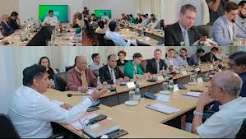
The meeting focused on the proposed Protection of the State from Terrorism Bill and the Prevention of Organised Crime Bill, with current and former Members of Parliament, including former MP M. A. Sumanthiran, expressing concerns about their potential implications for fundamental rights, the rule of law and democratic accountability.
Premadasa stressed that Parliament has a responsibility to scrutinise legislation, protect independent institutions and ensure that executive power remains subject to the Constitution. He also emphasised that measures to combat terrorism and organised crime must be accompanied by effective judicial oversight and safeguards for civil liberties.
Particular attention was given to the Human Rights Commission of Sri Lanka’s (HRCSL) statement dated October 21, 2026, concerning the Prevention of Organised Crime Bill. The Commission assessed that the proposed legislation raised serious concerns regarding its compatibility with constitutional fundamental rights and Sri Lanka’s international human rights obligations.
The HRCSL also warned that certain provisions could be more restrictive than those contained in the Prevention of Terrorism Act of 1979.
Among the concerns identified were the admissibility of confessions made to senior police officers, detention ordered through executive authority, the broad definition of serious crimes and the use of factors such as clothing, tattoos and associations when assessing alleged membership in criminal groups. The Commission also raised concerns about provisions restricting judicial discretion over remand and bail.
The HRCSL has recommended withdrawing the Prevention of Organised Crime Bill and substantially revising it to bring it into line with constitutional safeguards and international human rights standards.
Separately, the Commission’s observations on the proposed terrorism legislation, dated October 1, called for a narrower definition of terrorism, judicial oversight of detention orders, meaningful judicial authority over bail, prompt access to legal counsel and an independent review mechanism.
The Commission also reiterated its position that terrorism-related offences should be addressed under ordinary criminal law.
The Bar Association of Sri Lanka (BASL), in a statement issued on October 21, also called for the withdrawal of the Prevention of Organised Crime Bill and the withdrawal or revision of the proposed terrorism legislation in its current form. It further requested the publication of the relevant expert committee report and raised concerns about alleged departures from the committee-approved draft.
During the meeting, Premadasa called for the publication of expert recommendations, clear and proportionate definitions of offences, meaningful judicial discretion over detention and bail, and safeguards against coerced confessions and arbitrary searches. He also stressed the importance of consulting the BASL, HRCSL and other relevant stakeholders before enacting legislation with far-reaching consequences.
He maintained that such safeguards were essential not only for politicians and activists but also for ordinary citizens, young people, families and businesses that could be affected by the criminal justice system.
Premadasa further emphasised that national security and the rule of law should reinforce each other rather than undermine one another.
The meeting provided an opportunity to present the Opposition’s concerns to diplomatic and international representatives. Premadasa stressed the importance of constructive dialogue while reaffirming that Parliament, the judiciary and national institutions bear primary responsibility for addressing Sri Lanka’s legal and constitutional matters.
He reiterated his commitment to parliamentary engagement in developing effective security legislation that protects the public from serious crime while safeguarding constitutional democracy, judicial independence and individual freedoms.
Source: Serendib News