Sajith Premadasa Calls for Environmental Education from Early Childhood to Build Climate Resilience
The Opposition Leader says environmental conservation and sustainable development should be taught from early childhood, alongside stronger national preparedness for climate-related disasters.
· Sri Lanka
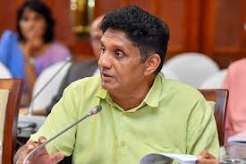
Premadasa Urges Climate Education and Stronger Disaster Preparedness
Opposition Leader Sajith Premadasa has called for environmental conservation and sustainable development to be introduced into the education system from early childhood, stressing that climate and weather literacy has become an essential need of the present era.
He said children should be educated about the importance of a green economy and the need to build a sustainable country. Such education, he noted, would help improve public awareness of climate change, weather-related changes and environmental protection.
Premadasa made these remarks while addressing the Parliamentary Caucus on Climate Change, co-chaired by Professor L. M. Abeywickrama and the Opposition Leader.
Scientific Forecasting and Institutional Preparedness
Premadasa stressed the importance of scientific understanding of the likelihood of El Niño and La Niña conditions, institutional preparedness and forecasting their potential effects on Sri Lanka's environment to minimise the resulting impacts.
He said scientific assessments of how these climate phenomena could affect rainfall and temperature patterns were essential. Such assessments should also consider their potential consequences for people, the environment, vegetation, biodiversity and wildlife.
Entire Country Must Be Prepared for Disasters
The Opposition Leader said comprehensive discussions were needed on water resources, agriculture, food security, the environment, wildlife and vegetation.
Although uncertainty remains over whether El Niño or La Niña conditions will occur, he said this should not be used as a reason to neglect institutional preparedness. The country must establish effective mechanisms to respond appropriately to possible developments.
He emphasised that Sri Lanka must prepare for disasters in advance rather than wait until they occur before taking action. Preparedness, he said, should involve the entire country.
Environmental Literacy Should Begin in Schools
Referring to the International Day for Disaster Risk Reduction, observed on October 13, Premadasa said disaster preparedness should begin at home and must not be treated as the responsibility of the government alone.
He called for the participation of government institutions, non-governmental organisations and citizens in strengthening the country's ability to face disasters. Environmental literacy, he added, should be provided to the public, beginning during school education.
Premadasa also referred to a proposal by the Prime Minister to make environmental conservation and sustainable development a compulsory subject from Grades 1 to 13. He said children should receive this knowledge from an early age and that the school curriculum should be revised accordingly, adding that although the initiative was overdue, it should begin without further delay.
Calls for a Comprehensive Disaster Management Mechanism
Premadasa said the existing disaster management structures, laws and procedures were inadequate to address the evolving nature of disasters. He called for a comprehensive mechanism that could be regularly updated in response to new challenges and lessons learned from each disaster.
He urged members of the Parliamentary Caucus to work together across party lines to strengthen disaster preparedness and protect the country from future threats.
Academics and UN Representatives Attend
The meeting was attended by academics from the Department of Geography at the University of Kelaniya, including Professor Nishan Sakalasuriya, Head of the Department, Dr Saseeka Wijesekara, W. V. W. G. Waniganeththi and lecturer Pasindu Jayathilaka, along with other academic staff.
Professor Rathnasiri Prematilaka of the Postgraduate Institute of Archaeology at the University of Kelaniya was also present.
Representatives of several United Nations-affiliated organisations attended the meeting. They included H. C. N. Siriwardena, Country Programme Advisor at the United Nations Industrial Development Organization (UNIDO); Harshini Halangoda, Country Programme Manager at UN-Habitat; Sureka Dilrukshi of the United Nations Development Programme (UNDP); Shirantha Gamage, who works on migration, environment and climate resilience at the International Organization for Migration (IOM); and Anoop Kumar Satpathy of the International Labour Organization (ILO).
Source: Serendib News