Ananda Palitha Criticises Plan to Introduce 75 Fuel Stations, Calls for Action over Gnanasara Thera’s Robes
· Sri Lanka
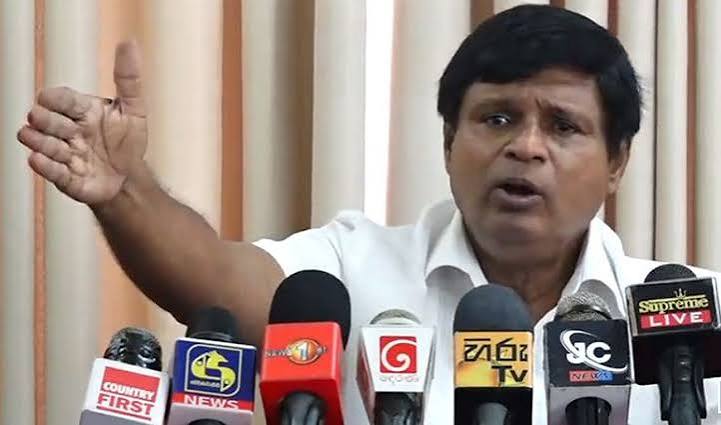
Ananda Palitha, convener of the Samagi Joint Trade Union Alliance, has criticised the government’s plan to introduce 75 fuel stations, arguing that the move would fail to address the country’s underlying fuel distribution problems.
Speaking at a media briefing, Palitha compared the proposal to “wearing a loincloth after stepping into a river”, suggesting that the government was taking action too late or addressing the problem in the wrong way.
He said Sri Lanka already had more than 500 fuel stations and questioned the need to introduce another 75 without resolving existing distribution issues.
According to Palitha, fuel was available in storage facilities while members of the public continued to face difficulties obtaining supplies. He argued that the Ceylon Petroleum Corporation should distribute fuel through its existing network if private companies were unable to ensure adequate distribution.
Alternatively, he called for the government to consider taking over fuel stations where necessary.
Palitha also criticised the government’s approach to fuel pricing, warning against increasing prices at the end of the month merely to satisfy private companies. He called on the President to address the issue directly and take steps to prevent further hardship for the public.
Calls for Resolution of Gnanasara Thera’s Robe Controversy
Palitha also commented on the controversy surrounding the treatment of Ven. Galagoda Aththe Gnanasara Thera in prison, particularly the removal of his Buddhist robes.
He said the monk had previously been imprisoned while continuing to wear his robes, referring to the period before he was granted a presidential pardon by former President Maithripala Sirisena.
Palitha questioned why the current situation had arisen and argued that the issue should be resolved without allowing religious tensions to escalate.
He called on the authorities to ensure that the monk was treated in accordance with the respect and traditions associated with the Buddhist clergy. He also opposed the appointment of further committees, saying that prison officials were now facing pressure over the matter.
According to Palitha, the controversy had led members of the Buddhist clergy to take to the streets to demand that the monk be allowed to wear his robes. He argued that religious leaders should not have to mobilise public support to resolve such an issue.
He further called on the government to consider granting a pardon, arguing that the controversy should not be allowed to create the perception of retaliation against a religious figure.
Palitha also referred to the views expressed by Professor G. L. Peiris on the matter, urging the authorities not to take action to satisfy the wishes of any particular individual or group.
Warns against Undermining Public Trust
Palitha criticised what he described as the government’s failure to act in accordance with the public mandate. He also cautioned against placing blame on officials appointed to carry out their duties when responsibility for decisions lay elsewhere.
He alleged that some individuals who had previously worn Buddhist robes had benefited from the protection associated with the clergy, and argued that the current controversy was setting a damaging example.
Palitha urged the government to respect Buddhism and other religions and called for a practical resolution rather than further public confrontation.
He concluded by reiterating his concerns about fuel distribution and the treatment of the monk, calling on the President to address both matters in a way that would reduce public hardship and prevent religious divisions from deepening.
Source: Serendib News