Sajith Premadasa Accuses Government of Preparing Repressive Laws to Retain Power
· Sri Lanka
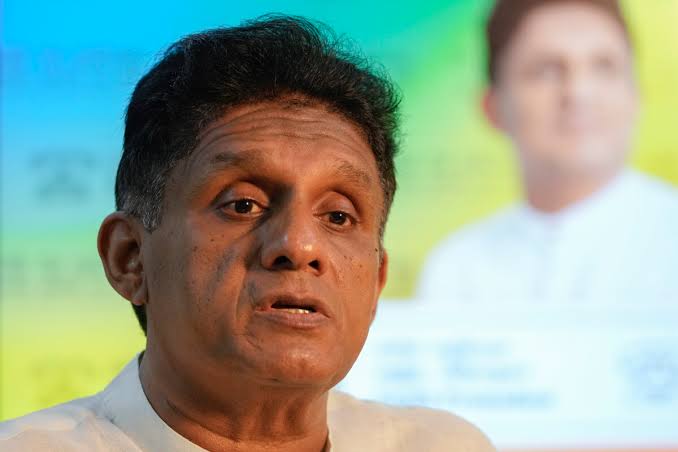
Opposition Leader Sajith Premadasa has accused the Government of preparing to introduce a series of repressive laws in an attempt to retain power, claiming that the proposed legislation could undermine democracy and restrict fundamental freedoms.
He said the Government had promised to provide fuel at prices based on the cost at which it was unloaded at ports, yet queues had emerged in some districts. He also recalled the promise to reduce electricity tariffs by 33 per cent, claiming that another electricity tariff increase was expected soon.
According to Premadasa, the Government's inability to address public concerns and its difficulties in reaching out to the people had left the President and the administration in a vulnerable position. He alleged that the Government was now preparing two laws that could restrict freedom of speech, assembly and expression of opinion.
Premadasa made these remarks while attending an event at Sri Shakya Munindrarama Temple in Pahala Ambagaswewa, in the Medirigiriya electorate of the Polonnaruwa District, where 100 bags of cement were donated for the temple's development work.
He identified the proposed Protection of the State from Terrorism Act and the proposed Prevention of Organised Crime Act as measures that could be used to suppress the public.
While acknowledging that protecting the country from terrorism and preventing organised crime were necessary, he argued that the proposed laws could impose excessive restrictions on people's freedoms.
He expressed concern over the broad powers that could be granted to authorities to issue detention orders and the wide scope of the proposed definition of terrorism. He also claimed that the organised crime legislation could allow people to be labelled as criminals based on their hairstyles, clothing or tattoos.
Premadasa Questions Scope of Proposed Organised Crime Law
Premadasa further alleged that even gatherings such as a musical event attended by five people could potentially fall within the scope of organised crime under the proposed legislation.
He claimed that the laws were being introduced to protect the Government from public criticism rather than to protect the country from terrorism.
He also alleged that factories were closing and people's sources of income were declining, while the Government had failed to provide solutions to these problems. He said the administration was instead preparing restrictive legislation to maintain its political position, adding that even people who had voted for the ruling party could potentially be branded as terrorists.
Says Government Should Act Against Crime Without Restricting Democratic Rights
Premadasa said Sri Lanka needed legislation in line with international conventions to combat terrorism and organised crime. However, he argued that the proposed measures would instead grant excessive powers to the executive.
He accused the present Government of committing what he described as the country's biggest organised crime and alleged that it continued to mislead the public.
He said drug trafficking, robbery, corruption and fraud must be eradicated, while emphasising that citizens must retain their democratic right to assemble peacefully and stand up for their rights. Restricting those freedoms, he argued, would itself amount to organised wrongdoing.
Comments on the Buddhist Clergy and Religious Affairs
Premadasa also commented on recent controversies involving Buddhist monks and the removal of monks' robes.
He cited figures indicating that Sri Lanka has 14,129 temples, 10,347 Dhamma schools, 824 pirivenas and 327 regional Buddhist Sasana protection councils.
He said all parties had a responsibility under the Constitution to develop these institutions and support the advancement of the Buddha Sasana.
He urged the Government and the public to listen to the advice and guidance of the Maha Sangha rather than engaging in arguments with Buddhist monks. He further stated that decisions concerning the removal or restoration of a monk's robes were matters for the Maha Sangha and religious leaders, not laypeople.
Premadasa described the removal of monks' robes by laypeople as a serious insult to Buddhism. He said political leaders and officials, including the President, should have acted with greater consideration, while clarifying that his criticism concerned the Government's involvement and not the judicial process itself.
Calls on Government to Respect Constitutional Provisions on Religion
The Opposition Leader called on the President and the Government to study the Constitution, stressing that while Buddhism has been given the foremost place under the Constitution, other religions and communities must also receive proper protection, recognition and respect.
He referred to the administration of former President Ranasinghe Premadasa, saying that the Ministry of Buddha Sasana had been established as a Cabinet-level ministry, while separate state ministries had been created to address the affairs of other religions, ethnic communities and cultures.
He said such arrangements were intended to promote unity, brotherhood, trust and reconciliation, and accused the present Government of disrespecting Buddhism through its handling of issues involving Buddhist monks.
Highlights Public Concerns Over Rising Living Costs and Paddy Prices
Premadasa also said people across the country were expressing growing frustration over economic difficulties.
He pointed to a Rs. 5 increase in the price of bread, the lack of solutions to the human-elephant conflict, rising inflation and increasing prices of essential goods.
He also criticised the absence of a stable guaranteed price for paddy.
Recalling a pledge made during the presidential election campaign to establish a guaranteed paddy purchasing price of Rs. 150 per kilogram, he said the commitment had not been fulfilled.
Citing figures attributed to the Agriculture Minister, Premadasa said the cost of producing one kilogram of paddy was Rs. 137, while the Government's guaranteed price was Rs. 120. He argued that this left farmers with a loss of Rs. 17 per kilogram.
Source: Serendib News