Sajith Premadasa Accuses Government of Breaking Promises to Farmers
· Sri Lanka
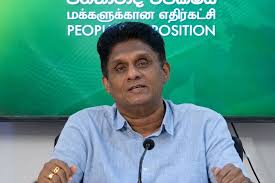
Opposition Leader Sajith Premadasa has accused the government of failing to honour its commitments to Sri Lanka’s farming community, citing concerns over paddy prices, rising cultivation costs, fertiliser quality and continued rice imports.
Premadasa made these remarks while addressing a farmers’ meeting near the market in Dehiattakandiya, where he criticised the government’s agricultural policies and called for a comprehensive national plan to support farmers.
He said the social understanding established between the government and the farming community during the past two presidential elections had been undermined, arguing that farmers were now facing mounting financial difficulties despite promises made before the elections.
Farmers face rising cultivation costs
Premadasa said farmers were struggling to finance cultivation, with some pawning jewellery and mortgaging land or taking high-interest loans to purchase seeds and other essential inputs.
He questioned whether the existing fertiliser subsidy of Rs. 30,000 per hectare, up to two hectares, was sufficient to cover cultivation expenses. He also alleged that seed prices had increased and that fertilisers, fuel and weed-control products varied in price between retailers, while concerns remained over their quality.
He further criticised the application of Value Added Tax (VAT) to agricultural equipment, saying the additional costs were placing further pressure on farmers.
Opposition questions paddy prices
The Opposition Leader also raised concerns about the prices farmers receive for their harvests, arguing that they were insufficient to cover production costs.
According to Premadasa, the government had previously promised a guaranteed paddy purchasing price of Rs. 150 per kilogram. He claimed that paddy was currently being purchased at around Rs. 90 to Rs. 100 per kilogram in some cases, while the government had reportedly acknowledged a production cost of approximately Rs. 137 per kilogram.
He said that even if the purchasing price for Nadu paddy reached Rs. 120 per kilogram, farmers could still face a loss of around Rs. 17 per kilogram against the cited production cost.
Premadasa accused the government of treating farmers differently after coming to power and criticised statements by ministers concerning alternative crops, including maize.
Questions raised over rice imports
Premadasa questioned the government's decision to import rice despite what he described as a domestic surplus.
He cited annual domestic rice production of approximately 3.4 million metric tonnes against demand of around 2.5 million metric tonnes. He argued that even after accounting for rice used for by-products and animal feed, a surplus should remain.
He also claimed that the government had imported approximately 340,000 metric tonnes of rice, questioning the need for these imports in light of the figures he presented.
The production, consumption and import figures cited at the meeting were not independently verified for this report.
Calls for a national agricultural plan
Premadasa said Sri Lanka needed a coordinated agricultural strategy based on consumer demand for different rice varieties. He cited demand shares of approximately 76% for red and white Nadu rice, 12% for Samba and 12% for Keeri Samba, arguing that cultivation plans should reflect market requirements.
He also alleged that substandard fertilisers and agricultural chemicals were entering the market without adequate regulation, benefiting importers at the expense of farmers. He called for stronger quality controls over agricultural inputs.
Proposals for crop insurance and modern farming
The Opposition Leader called for an affordable crop insurance scheme supported by the government to protect farmers against crop losses and other risks affecting their livelihoods.
He also urged the government to ensure fair prices for paddy, strengthen public-sector purchasing and introduce measures to prevent farmers from being disadvantaged when selling their harvests.
Premadasa said the country should move towards modern, technology-based agriculture, including the use of drones and advanced methods of applying fertilisers and agricultural chemicals. He added that the Samagi Jana Balawegaya had developed proposals aimed at promoting more efficient farming practices.
He argued that a sustainable agricultural policy should protect farmers’ incomes while ensuring a reliable supply of rice at reasonable prices for consumers.
Source: Serendib News