Rural development ministry to use AI to rank states on audit performance
· India
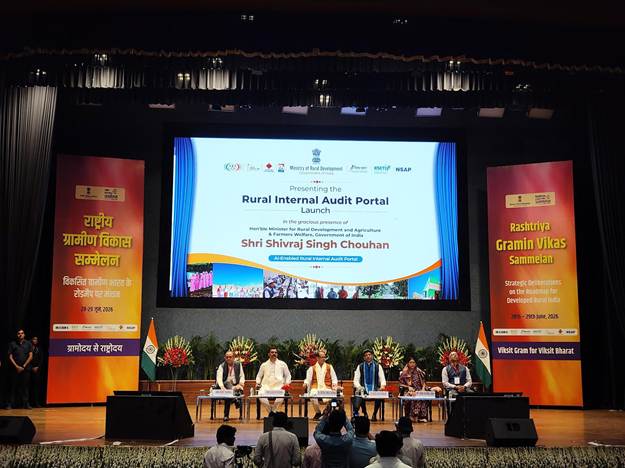
New Delhi: The rural development ministry will use artificial intelligence (AI) to rate states on how quickly and effectively they respond to internal audit observations, in a move aimed at strengthening financial oversight and improving the implementation of flagship rural schemes.
The ministry plans to use an AI-enabled internal audit portal to boost accountability, accelerate corrective action, and improve financial management, amid concerns about rural demand and the effective use of public funds, according to two people aware of the development.
The rankings are expected to foster healthy competition among states while ensuring audit findings translate into measurable improvements in programme delivery. This move also shifts internal audits from a compliance-driven exercise to a risk-based management system by digitising the entire audit lifecycle, from audit planning and field inspections to responses, action taken reports (ATRs) and closure of observations.
The development assumes significance given the ministry has been allocated ₹2.31 trillion in FY27 for flagship programmes, including Viksit Bharat–Guarantee for Rozgar and Ajeevika Mission ( ₹95,692.31 crore), Pradhan Mantri Awaas Yojana-Gramin ( ₹54,916.70 crore), Deendayal Antyodaya Yojana-National Rural Livelihoods Mission ( ₹19,200 crore) and Pradhan Mantri Gram Sadak Yojana ( ₹19,000 crore).
The system will examine fund utilization, idle balances, inadmissible expenditure, compliance with financial rules and the adequacy of internal controls. The AI-enabled portal will also assess states on key performance indicators such as the quality of audit responses, adherence to timelines and implementation of corrective measures.
The portal digitally tracks every stage of the audit process, making both auditors and implementing agencies accountable.
"A key feature of the platform is its ability to convert every audit observation into a clearly defined action point, reducing ambiguity and making it easier for state governments and implementing agencies to respond. Artificial intelligence tools are also being used to convert thousands of legacy audit observations into actionable tasks, enabling quicker disposal of long-pending cases," said the first person cited above.
"Integration with the public financial management system (PFMS) and scheme management information systems will enable early identification of financial risks and improve the utilization of public funds," said the second person cited above.
The framework evaluates states and districts on multiple parameters, including timely utilization of funds, achievement of physical and financial targets, beneficiary service delivery, disposal of previous audit observations, quality of financial reporting and the effectiveness of monitoring systems.
While the rankings are not currently linked to fund allocation or incentives, the ministry said they would help identify states requiring closer monitoring and support better governance.
“At present, the internal audit portal is intended to strengthen governance, accountability, risk management and programme implementation, and is not directly linked to fund allocation or performance incentives,” the rural development ministry, in an email response, said.
"However, to encourage timely and effective corrective action, the portal also rates States on key performance parameters, including the quality and timeliness of their responses to audit observations and the implementation of corrective measures."
The ministry said as the system matures, it will generate valuable information on recurring risks, quality of financial management, responsiveness to audit observations and effectiveness of internal controls. This information can support risk-based monitoring and better decision-making by the ministry.
It added that as the system matures, it will generate information on recurring financial risks, the quality of financial management, responsiveness to audit observations and the effectiveness of internal controls, supporting risk-based monitoring and better decision-making.
"Any future linkage with fund allocation or performance incentives will depend on Government policy and the guidelines of individual schemes. The current focus is to establish internal audit as an effective early-warning, corrective-action and management support system that promotes better utilization of public resources and improved programme outcomes," stated the ministry.
Source: Live Mint