Prison Buses Are Making More Trips Than Metro Buses,” Says Deputy Minister Eranga Gunasekara
· Sri Lanka
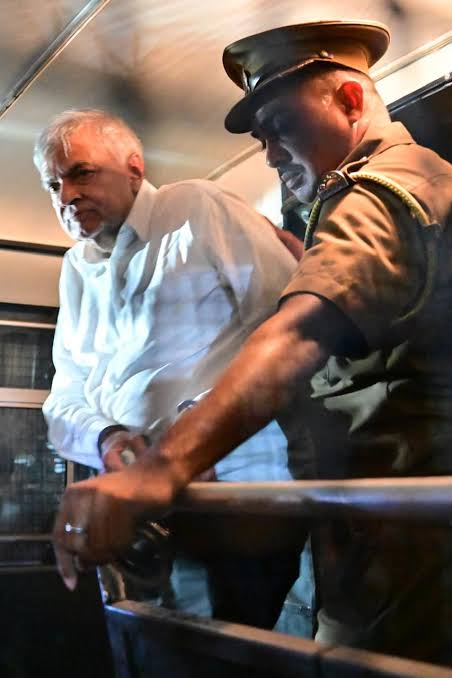
Deputy Minister of Urban Development Eranga Gunasekara has said that prison buses are now making more trips than Metro buses, claiming that the law is increasingly being enforced against individuals accused of corruption, regardless of their family background or political connections.
He made these remarks while addressing a constituency-level public meeting organised by the National People’s Power (NPP) under the theme “The People’s Power to Build the Nation” in Kolonnawa.
Recalling the NPP’s earlier political struggles, Gunasekara said that some people had previously dismissed the movement, telling its members that they were doing the groundwork while others reaped the benefits.
“However, today, some people tell us, ‘Minister, we did not vote for you, but we want you to move forward.’ This shows that even those who did not vote for us are beginning to recognise that the country is moving forward,” he said.
He recalled that critics had questioned the movement’s English-language skills and international relations, while warning that gas cylinders would explode if the NPP formed a government. Others had accused the party of wanting to return the country to an era of fuel and essential-goods queues.
Gunasekara also said that concerns had been raised about religious freedom under an NPP government. Critics had claimed that Buddhism would come to an end and that religious processions would no longer be permitted. Similar claims had been made that Muslims would lose their religious freedoms and would not be allowed to perform their five daily prayers.
He maintained that these predictions were proving to be false.
According to Gunasekara, the government had made gradual progress within a relatively short period of two years, despite inheriting a country in a severely weakened economic condition. He said the government had been able to establish a strong administration with the support of the public.
He further claimed that Sri Lanka had recorded its highest-ever tax revenue during the previous year, while remittances from Sri Lankans living overseas had increased. He also pointed to the arrival of approximately 2.3 million tourists, saying that the country had earned record revenue from the tourism sector.
He attributed these developments to the establishment of a government backed by the people and its efforts to eliminate corruption and financial misconduct in politics.
In the past, he said, public funds had been misused by corrupt individuals, resulting in money leaking out of the Treasury despite efforts to replenish it. He claimed that the government had taken steps to stop these financial leakages and redirect public funds towards providing relief to citizens.
Addressing the impact of the ongoing global conflict and rising fuel prices, Gunasekara said the government had managed the situation without transferring the entire burden to the public. He said the government had absorbed a portion of the additional costs that it could afford to bear.
Comparing the current administration with previous governments, he said earlier administrations had distributed benefits generously to politicians while giving the public only a small share.
“We have now established a system in which the public receives the larger share, while politicians receive only a small portion,” he said.
Gunasekara added that members of the NPP, from the President downwards, were expected to set an example for the public. He said the government had reduced the use of official vehicles and taken steps to abolish pension benefits for Members of Parliament.
He then turned to the issue of law enforcement, saying that the law was now beginning to apply equally to everyone.
“There are two types of buses we can talk about today: Metro buses and prison buses. Today, prison buses have to make more trips than Metro buses,” he said.
He claimed that individuals accused of corruption were being taken to prison while celebrating with slogans of victory. He argued that these individuals had not been imprisoned for protecting the country, the nation or agriculture, but because they had been caught in bribery and corruption-related activities.
He also alleged that some individuals who claimed to act in the public interest had accepted bribes and subsequently faced imprisonment.
Referring to the Krrish building project, Gunasekara said allegations had also emerged in connection with the development. He clarified that he was referring to a building project and not a biscuit brand.
He also referred to public discussion surrounding Shiranthi Rajapaksa. According to his remarks, allegations had been raised concerning funds obtained from China and the Bank of Ceylon in connection with the donation of a CT scanner to a hospital on the occasion of her son's birthday.
Gunasekara stressed that the law should be enforced without distinction between fathers, sons, mothers or grandfathers, adding that this was now taking place.
He said the people had gained power, while opposition parties were increasingly facing challenges. He added that political opponents were beginning to experience anxiety about the developments taking place in the country.
He also acknowledged public discussion and concern surrounding Ven. Galagodaatte Gnanasara Thera, saying the government recognised that the issue had caused some unease among the public.
Gunasekara noted that the Prisons Ordinance dated back to the 1800s and argued that it needed to be amended to suit modern circumstances. He said the President shared this view.
However, he emphasised that the government would not make changes by placing itself above the law. Instead, he said any necessary amendments would be introduced through the proper legal procedures.
Source: Serendib News