Meet Anirudh Rao, the 11-year-old building a drone system to predict tornadoes
· India
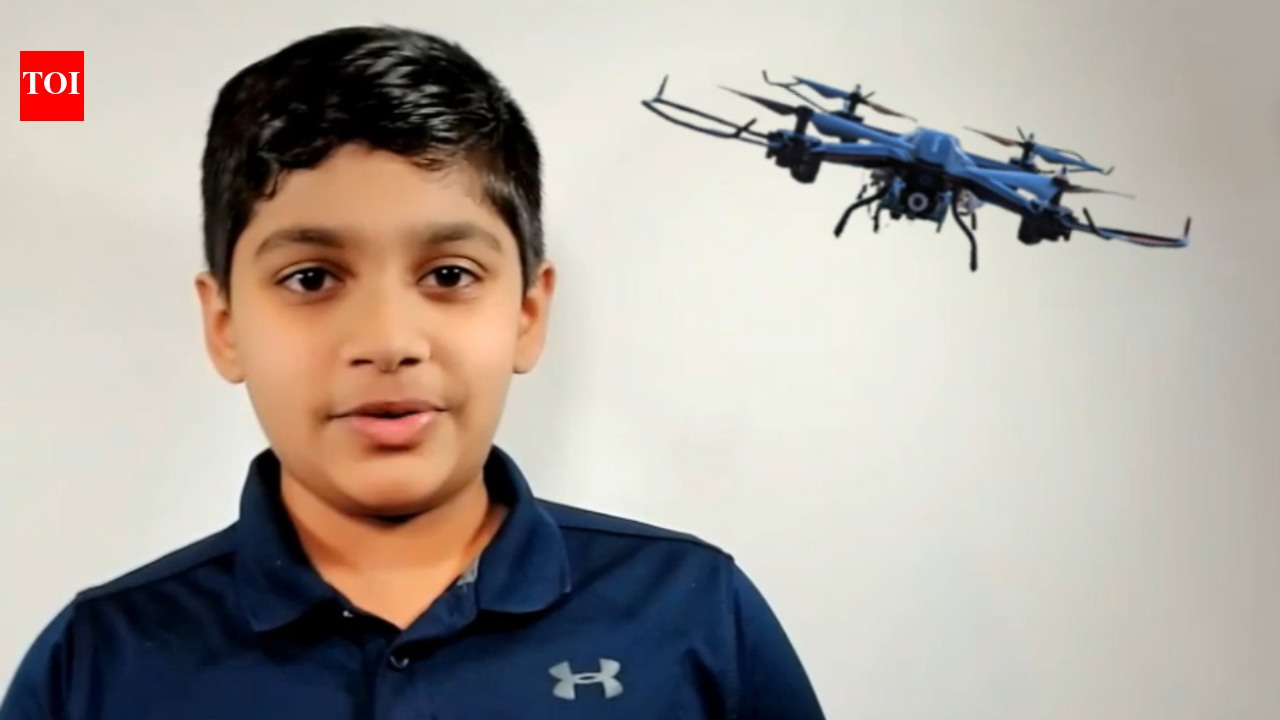
At just 11, Anirudh Rao began looking at tornado warnings from a different angle: not how to predict storms perfectly, but how to give people more time to respond. Growing up in Colorado, where tornadoes are a recurring threat, Rao developed Revere, a prototype system combining drones and sensors that measure factors such as infrasound, temperature and atmospheric pressure. His project aims to explore whether gathering information closer to developing storms could extend warning times from about 13 minutes to as much as 40 minutes. What started as a response to a tornado disaster has since grown into a wider programme of technology, environmental education and community outreach.
What pushed 11-year-old Anirudh Rao to rethink tornado warningsAnirudh Rao belongs to an area in Colorado where the state experiences roughly 50 tornadoes in an average year. For Rao, living in the region made severe weather more than something discussed in a classroom or seen on television.
He began looking at the warning systems already used to alert communities and became interested in the gap between detecting a dangerous storm and giving people enough time to get somewhere safe. The project that followed was not simply an attempt to create another weather alert. Rao wanted to investigate whether technology placed closer to developing storms could provide information earlier. That became the starting point for Revere.
Drone and sensor system behind Rao's tornado warning prototypeThe prototype uses drones alongside sensors capable of measuring factors including infrasound, temperature and atmospheric pressure. These measurements can provide information about changing conditions around a storm, while the drone platform gives the system a way to gather data in areas where conventional monitoring may not provide the same coverage.
For Rao, building the system meant learning several skills that were outside the usual boundaries of a school project. He had to understand drone operation, develop the necessary coding and learn how to examine the data produced by the sensors.
The name Revere also reflects the project's basic purpose. Rather than waiting until a tornado is already obvious to people on the ground, the system is intended to identify useful warning signals earlier and pass that information towards those who may need to act.
According to Non-Profit Organisation Organisation, California (Action for Nature), Rao's original project description put the potential warning period at about 40 minutes, compared with an average warning time of roughly 13 minutes. The figures describe an intended improvement from the prototype rather than a demonstrated guarantee for every tornado.
From tornado technology to teaching thousandsDeveloping the equipment was only part of the work. Rao also began explaining the problem to other people. He has taken the tornado project to science festivals and educational events, where he has spoken about severe weather, climate change and the technology behind his idea. His outreach has reached thousands of people, with the source material putting the number of attendees and students engaged through his presentations and workshops at more than 4,000.
Those sessions have covered subjects beyond tornado detection. Rao has introduced students to areas such as 3D printing and beginner-level artificial intelligence, while some of his educational activities have explored cultural traditions and biodiversity.
The range is unusual for someone whose best-known project is tied to weather technology, but it reflects the way he approaches education. The invention is something he can demonstrate, while the workshops give him an opportunity to involve other students in the process of making and investigating things.
His environmental work does not stop with tornadoesRao has also taken part in projects that have little to do with storm detection. Through his involvement with the Children’s Kindness Network, he has helped organise international essay and art competitions centred on kindness towards people and the natural environment. The work gives him a different route into environmental education, one based less on sensors and software and more on communication and participation.
That combination has become a recurring feature of his activities. He works on a technical problem, but he also spends time explaining environmental issues to younger audiences and encouraging them to investigate subjects for themselves.
His educational workshops have therefore become almost as important a part of his public work as the original tornado project.
Recognition followed the tornado projectRao's work has received recognition from several youth innovation and environmental programmes. As reported by Young Planet Leaders, among the honours attributed to him are the Paradigm Challenge World Winner title, recognition as a National STEM Champion, the International Eco-Hero Award from Action for Nature and the True Little Hero International Award. The awards cover different areas, from science and environmental innovation to community service.
His projects have also brought media appearances. He has featured on The Jennifer Hudson Show and NBC Nightly News Kids Edition, where he has discussed his work and the problems he is attempting to solve.
The attention has given the tornado project a reach well beyond Colorado. It has also placed Rao's broader approach, combining technology with environmental and community education, in front of audiences who might otherwise never encounter a school-age engineering project.
Source: Times of India - World