Madura Withanage Warns Proposed Organised Crime Bill Could Be Used to Suppress Dissent
· Sri Lanka
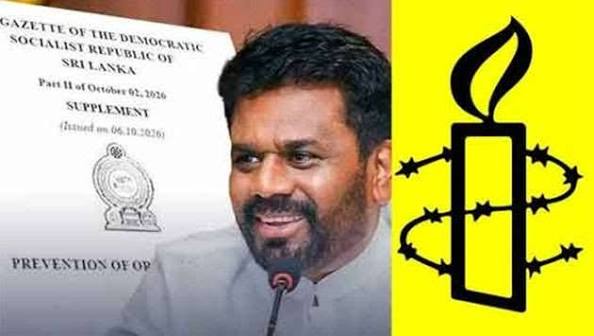
Sarvajana Balaya operations chief and lawyer Madura Withanage has criticised proposed legislation aimed at preventing organised crime, warning that certain provisions could be used to target social activists and suppress public opposition to the government.
Speaking amid controversy surrounding the death of a young man at Homagama Police Station, Withanage raised concerns about deaths reported in police custody and questioned whether the government was moving towards greater repression rather than fulfilling its promises.
He cited figures he attributed to the United Nations, claiming that 18 people had died inside police stations in Sri Lanka during 2025, with three more deaths reported by March 2026. These figures could not be independently verified from the supplied material.
Withanage alleged that the government was seeking to introduce laws to restrict public protests and create what he described as a “police state.” He also warned that social activists who criticise the government could be labelled as terrorists or members of organised criminal groups.
Referring to provisions including Sections 21, 22, 24, 43, 44, 47 and 65 of the proposed organised crime legislation, he claimed that the measures could be used to harass members of the public.
He also raised concerns about Section 4(2), arguing that people with tattoos or particular hairstyles could face suspicion if their appearance resembled that associated with organised criminal groups.
As an example, Withanage described a hypothetical or alleged scenario in which a social activist critical of the government could be arrested and detained for up to a year because a tattoo resembled one used by a criminal group. He questioned whether such provisions could lead to arbitrary detention and restrictions on individual freedoms.
Withanage further argued that the proposed measures could create fear among the public and discourage people from expressing dissent, adding that the government was laying the groundwork for repression in response to growing public opposition.
Source: Serendib News