India, Asia rethink LNG after a $7.4bn spot bill
· India
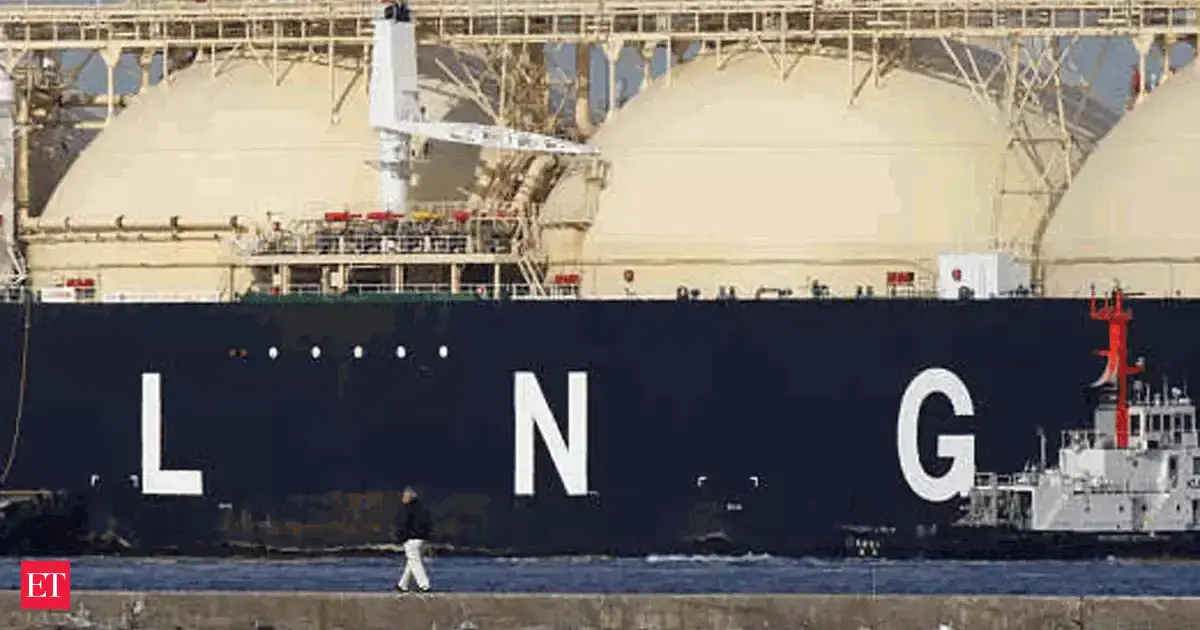
India and four other major emerging Asian LNG buyers have spent a combined $7.4 billion on spot liquefied natural gas since the US-Iran war began, more than double the cost of comparable supplies bought under long-term contracts a year earlier, according to a Bloomberg News analysis of purchase tenders.
India, Pakistan, Bangladesh, Thailand and Vietnam — the major non-China emerging-market buyers in Asia — have turned to the spot market after disruptions to LNG shipments through the Strait of Hormuz cut off contracted supplies, pushing up prices.
The five countries spent $7.4 billion on spot LNG during the period, compared with about $3.1 billion for a similar volume under long-term contracts over the same period last year, Bloomberg reported.
The sharp increase in costs is putting pressure on Asian economies that rely on natural gas for power generation and industrial use. It is also prompting countries to reconsider how heavily they should depend on imported LNG over the longer term.
The disruption has particularly affected supplies from Qatar, which accounted for about a fifth of global LNG shipments before the conflict. Qatari LNG shipments through the Strait of Hormuz have largely stopped since the fighting began in late February, forcing buyers to seek replacement cargoes in the spot market.
The price shock could undermine LNG's position as a relatively reliable fuel for developing economies, particularly after the Russia-Ukraine war also triggered a global gas supply crunch and pushed prices sharply higher.
For now, however, many countries have limited alternatives. Switching quickly to other sources of power risks putting pressure on electricity supplies, leaving buyers dependent on LNG despite higher costs.
“If prices remain at such levels, we think that LNG will have a problem competing with the alternative fuels,” Fabian Kor, executive vice president for Asia at SEFE Marketing & Trading, said at a conference in Singapore last week, according to the Bloomberg report.
The longer-term response is already beginning to take shape.
Asian countries are looking at solar and wind power, coal, nuclear energy, domestic gas production and pipeline supplies as alternatives to imported LNG.Pakistan, which was earlier seen as a high-growth LNG market, is likely to increase its reliance on solar and hydropower because of the impact of the Hormuz disruption, the report added, citing BloombergNEF analyst Akshay Modi.
Bangladesh, meanwhile, has spent more than $2 billion replacing lost Qatari LNG supplies and is offering incentives for rooftop solar installations.
Thailand has also set a target of sourcing at least 65% of its electricity from renewable energy by 2050 under a newly released long-term energy plan.
For Vietnam and the Philippines, the shift could instead be towards coal as LNG becomes more expensive, Modi said. Global coal consumption is expected to hit a record this year, with higher gas prices adding to demand, according to the International Energy Agency.
The Middle East conflict is also prompting LNG buyers to diversify their suppliers. Around 80% of buyers surveyed by McKinsey expect to change their procurement strategies, with greater geographical diversification becoming a priority over the next few years, Bloomberg reported.
That could benefit LNG projects with direct access to Asian markets, including developments in Papua New Guinea, while producers in the US and Canada could also gain from the search for alternative supplies.
The current crisis comes as the LNG industry faces questions about future demand. Shell expects global LNG demand to rise 65% by 2050, driven largely by South and Southeast Asia. But high prices have already led to several proposed gas-fired power projects being abandoned or stalled.
Around 47 proposed gas-fired power plants, representing $52 billion in investment, have been cancelled, withdrawn or made little progress over the past five years across countries including the Philippines, Thailand and Vietnam, according to the Institute for Energy Economics and Financial Analysis.
“One geopolitical conflict is a really negative thing. A second geopolitical conflict is a pattern, and that is, fundamentally, being recognized by Asian countries,” Sam Reynolds, research lead for LNG and gas in Asia at IEEFA, said in the report.
Source: Economic Times - Top Stories