How the UAE is redefining childhood in the digital world
· United Arab Emirates
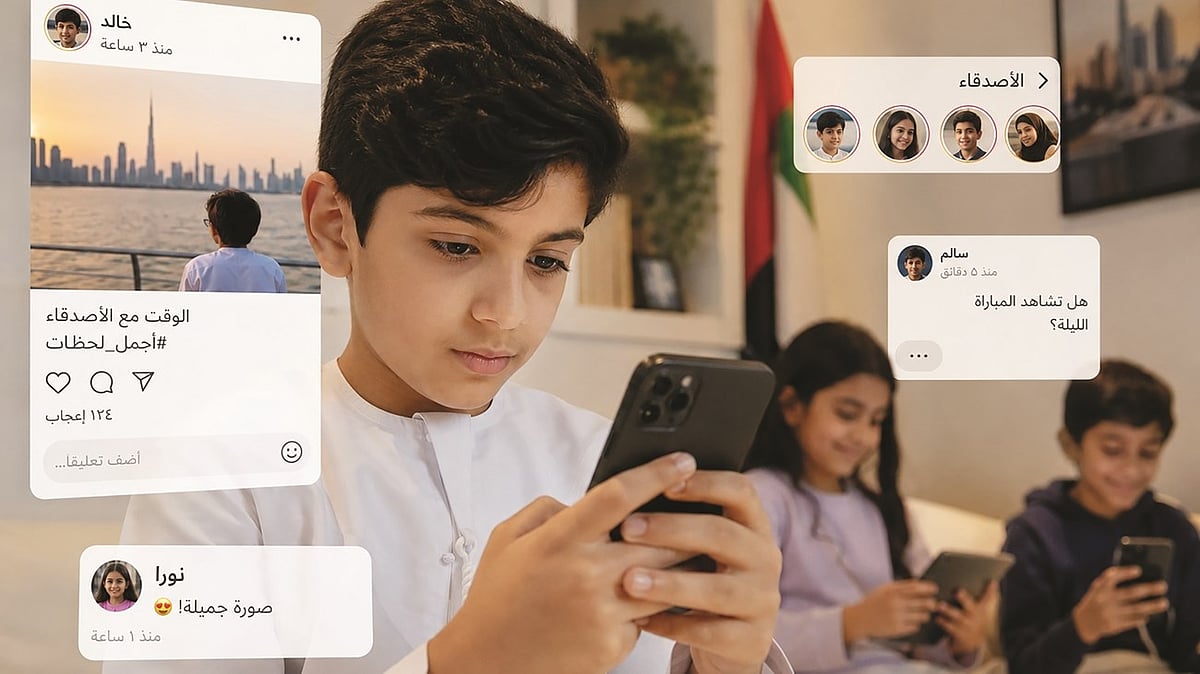
As smartphones and social media platforms become an integral part of children’s daily lives, the United Arab Emirates has taken a landmark legislative step by issuing Cabinet Resolution No. 106 of 2026 on Regulating Children’s Access to Social Media Platforms. The resolution ushers in a new era of child protection in the digital environment by shifting responsibility from families alone to digital platforms and technology companies.
Rather than merely prohibiting children from creating accounts, the resolution establishes a comprehensive legal framework governing children’s interaction with digital technology. It introduces age-verification requirements and imposes direct obligations on social media platforms to safeguard young users, reflecting the UAE’s vision that digital security is now an essential component of societal security.
Experts from the UAE Experts Program describe Cabinet Resolution No. 106 of 2026 as a significant milestone in strengthening children’s digital safety. They say the legislation provides a comprehensive framework capable of keeping pace with the rapid evolution of the digital landscape, while emphasizing that creating a safer online environment requires collective efforts by families, educational institutions, digital platforms, and lawmakers alike.
Asma Al Ezri, an expert with the UAE Experts Program representing the Community Development and Social Services sector, said protecting children in the digital world extends far beyond legislation and requires the active involvement of parents, schools, and technology platforms.
She stressed that social media platforms were never designed for children, making age restrictions a necessary and well-founded measure to safeguard their wellbeing.
Al Ezri urged parents not to create social media accounts for children below the legally permitted age or allow them to do so, warning that premature exposure to online risks could have lasting negative consequences for children’s safety, wellbeing, and healthy development.
She added that the Cabinet Resolution reflects the UAE’s forward-looking approach to strengthening its global leadership in establishing comprehensive legal frameworks for child protection in the digital environment. The legislation aims to keep pace with accelerating technological developments while placing children’s wellbeing at the heart of digital policymaking. These policies are expected to reduce children’s exposure to online risks and encourage safer, more responsible technology use, ultimately helping raise a generation that is digitally aware and capable of engaging positively with the online world.
The resolution is based on a growing body of international research showing that children face increasing exposure to digital risks, including:
The objective is therefore not to prevent children from using technology, but to ensure they can benefit from the digital world while minimizing its risks.
Faisal Al Hawi, a Fellow of the UAE Experts Program representing the Technology and Innovation sector, said the new legislation reflects the UAE’s commitment to anticipating future digital challenges and developing policies that evolve alongside technological change.
“This legislation goes beyond regulating children’s access to social media,” he said. “It establishes age-appropriate preventive measures designed to protect children from harmful or inappropriate online content while encouraging healthier digital habits from an early age.”
Al Hawi, who developed a national behavioral science-based program for schools and families aimed at reducing passive screen time among children aged six to ten, noted that passive screen time—consuming digital content without meaningful learning or interaction—has become one of the defining challenges of the digital age.
The resolution establishes 15 years as the minimum age for creating personal accounts on social media platforms.
Children under the age of 15 are prohibited from creating, using, or managing personal social media accounts.
They are also barred from accessing full social networking functions, including posting, commenting, sharing content, and interacting in public online spaces.
Source: Gulf News - Technology