Civil Society Activists Raise Concerns Over Economy, Governance and Treatment of Gnanasara Thera
· Sri Lanka
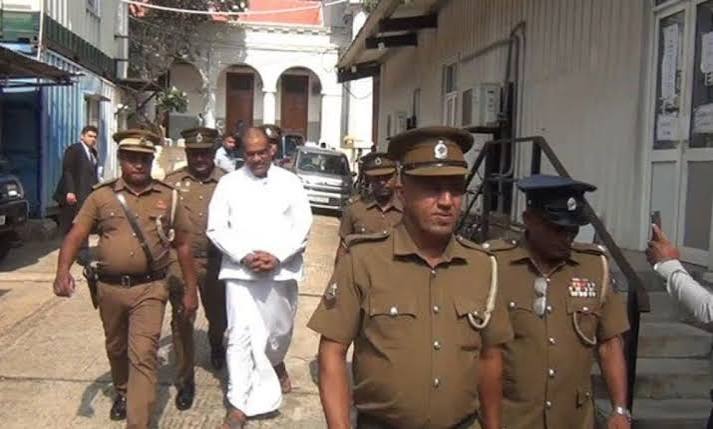
Civil society activists have raised concerns over Sri Lanka’s economic situation, government policy, political governance and the treatment of Ven. Galagodaaththe Gnanasara Thera, during a media briefing held at the Borella YMBA.
The discussion was organised under “Sihina 2029,” an initiative affiliated with the Lanka Mahajana Sabha, focusing on challenges facing the country amid the current political situation.
The speakers included Engineer Ananda Devasinghe, Chairman of the Piripun organisation; Dr. Piyavi Wijewardena, researcher and sociologist; Roshan Karawenella, Co-Convenor of the Civil Organisations Coordination Centre; and Mahendra Jayasekara, Chairman of the Colombo Young Men’s Buddhist Association.
Jayasekara said the removal of Ven. Gnanasara Thera’s robes had become a matter of concern and stressed that ensuring the safety and security of Buddhist monks was a responsibility of the Government.
He also questioned the Government’s claim that the country was progressing, saying that if the situation were genuinely improving, people themselves would organise meetings and invite the President rather than the President having to organise meetings around the country.
Jayasekara claimed that poverty had risen to around 65 percent and questioned what the Government meant when it described the country’s situation as favourable. He also referred to renewed fuel queues and criticised increases in fuel prices and taxes.
He called on the Government to introduce a special programme to address the country’s challenges over the next three years, rather than simply accumulating money in the Treasury and providing relief closer to elections.
Commenting on the country’s financial position, Jayasekara said the Government would face debt repayments in 2027 and questioned whether the country’s current reserves would be sufficient. He said both saving and spending without clearly defined objectives could create problems and stressed the importance of managing both the rupee and dollar accounts in national administration.
On the political situation, he criticised what he described as efforts by the President to strengthen his party’s organisational structure while serving as President.
Jayasekara also questioned the circumstances surrounding the prison authorities' treatment of Ven. Gnanasara Thera. Referring to reports that the monk had been made to wear prison clothing, he said the purpose behind such a decision was unclear and described it as inappropriate.
He further raised concerns over conditions within prisons, claiming that overcrowding was creating difficulties even for suspects who had not been convicted.
Jayasekara stressed that the judiciary should not be subjected to unnecessary political influence and said the public should have confidence that such interference was not taking place.
Regarding Ven. Gnanasara Thera, he said the main issue was not simply the imprisonment itself but the removal of the monk’s robes. He argued that society should not forget the messages and views expressed by the monk, particularly regarding mistrust between Sinhala, Muslim and Tamil communities.
He said the Government had a responsibility to examine the issues raised by the monk and stressed that people should not be divided along ethnic lines for different reasons, warning that such divisions could harm the country’s future.
Jayasekara also said that individuals who had committed offences involving corruption or fraud should be arrested if there was sufficient evidence against them.
He acknowledged that the Government had made progress in certain areas but claimed that the country had not achieved sufficient economic progress. He also referred to the continued departure of young people from Sri Lanka, saying that a properly managed country should create conditions that encourage young people to return.
He argued that instead of focusing primarily on reducing the prices of goods, successive governments should have placed greater emphasis on improving people’s actual economic well-being, including through higher incomes.
Jayasekara said the country’s system was gradually changing and that every sector should move forward rather than remain at its existing level.
He concluded that the Government was attempting to build public confidence and referred to its stated intention to remain in power beyond 2029.
Source: Serendib News