What sets Unesco-listed Wadi Wurayah apart? UAE official details 20-year journey
· United Arab Emirates
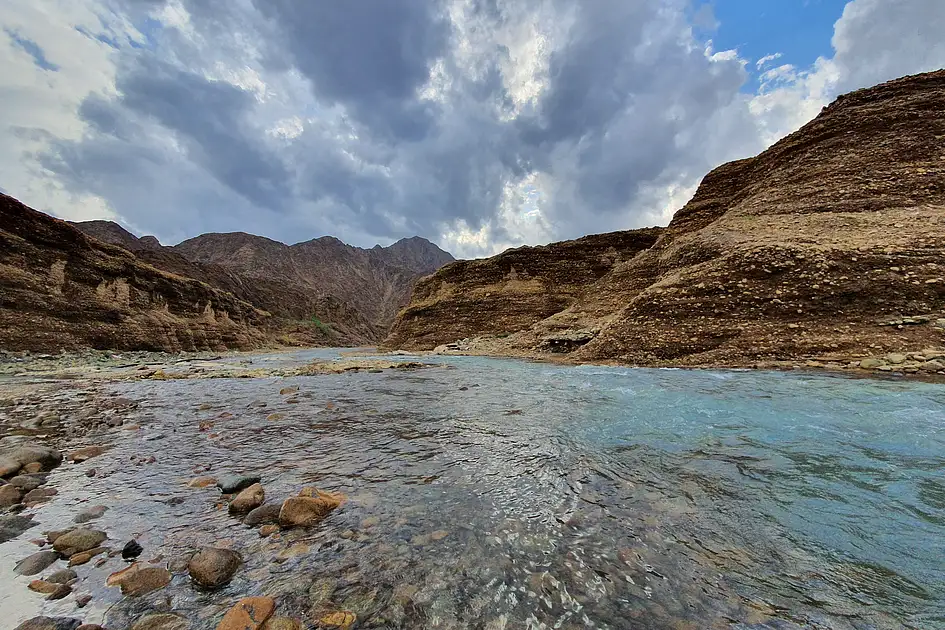
For the last 20 years, teams from Fujairah have been working on a mission. What began as a decree from the emirate’s ruler has now culminated in a historic moment for the UAE — the inscription of Wadi Wurayah National Park on the Unesco World Heritage List.
For Asilah Abdullah Al Mualla, Director-General of the Fujairah Environment Authority, the announcement was more than a diplomatic triumph. It was the realisation of a lifelong commitment to conservation, science, and the belief that the UAE’s natural heritage deserves a place on the world stage.
"This is a proud and historic moment for the emirate of Fujairah and for the United Arab Emirates," she told Khaleej Times. "The inscription of Wadi Wurayah national park on the Unesco World Heritage List is the culmination of nearly two decades of dedicated conservation, scientific research, and responsible environmental stewardship."
She added that it was also a reminder that conservation was a long-term commitment. “Success is achieved not by one individual, but through the collective dedication of many people working towards a shared vision," she said.
Preparing a World Heritage nomination was not easy, Asilah noted. It required extensive scientific evidence, detailed management planning, international evaluation, and continuous dialogue with Unesco and IUCN experts.
"One of the greatest challenges was demonstrating the site's Outstanding Universal Value according to the strict standards of the World Heritage Convention," she said. "This required years of research, careful documentation, and the collaborative efforts of multidisciplinary experts from both the UAE and abroad. It demanded patience, resilience, and an unwavering commitment to excellence."
Yet through every obstacle, the team persisted. Scientists, researchers, local communities, government institutions, and international partners all played a role. "This recognition belongs to everyone who has contributed over the years," she said. "Every member of our team who believed in the global importance of this extraordinary landscape."
When asked why Wadi Wurayah deserves international attention, Asilah explained that the park protects one of the most significant mountain freshwater ecosystems in the Arabian Peninsula, supporting exceptional biodiversity within a relatively small landscape. It safeguards rare and endemic species, maintains important ecological processes, and provides vital freshwater resources in an arid environment.
"Conservation has been guided by scientific research, long-term ecological monitoring, strong legal protection, and partnerships with national and international organisations," she said. "This integrated approach shows how biodiversity conservation and sustainable development can reinforce one another."
For these reasons, Wadi Wurayah serves not only as a protected area but also as an example of best practice for mountain ecosystem conservation in arid regions worldwide. "Wadi Wurayah demonstrates that effective conservation is achieved when science, governance, and community engagement work together."
She stressed that the inscription marks the beginning of a new chapter. "Our priority is to ensure that Wadi Wurayah's outstanding universal value is protected for generations to come," she said. "We will continue strengthening scientific research, ecological monitoring, habitat restoration, sustainable visitor management, and conservation education."
The future also holds ambitions for expanded international scientific collaboration, high-quality research, and greater public appreciation of the UAE's natural heritage.
"Above all, our vision is to ensure that Wadi Wurayah remains a living example of how nature can be protected through visionary leadership, evidence-based management, and collective responsibility," she said.
She concluded that the milestone was a responsibility. "The World Heritage inscription is not simply a recognition of what we have achieved; it is a commitment to what we must continue to protect,” she said, “Wadi Wurayah is a gift entrusted to us by nature, safeguarded through the vision of our leadership, and preserved for the benefit of humanity and future generations."
Nasreen Abdulla is a Special Correspondent covering food, tech and human interest stories. When not challenged by deadlines, you’ll find her pulling off submissions on the jiu jitsu mats.
Source: Khaleej Times - Top Section