Veterinary Doctors Criticise Proposal to Transfer Rabies Control Programme
· Sri Lanka
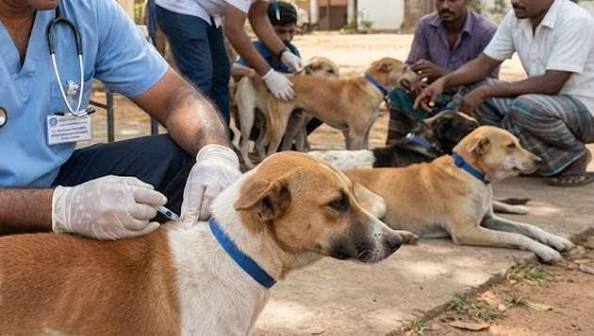
A group of veterinary doctors has criticised recent comments by the Government Medical Officers’ Association (GMOA) regarding the proposed transfer of Sri Lanka’s rabies control programme from the Ministry of Health to the Department of Animal Production and Health, as well as the proposed new legislation.
Speaking at a media briefing in Colombo, Dr. Chamith Nanayakkara, Convener of the Veterinary Doctors’ Collective for Humane Animal Population Management, said the Ministry of Health has been responsible for the rabies control programme for the past 73 years, yet rabies has still not been eliminated from Sri Lanka.
He said eliminating rabies requires addressing the virus in animals, particularly dogs, rather than focusing primarily on vaccinating humans after dog bites.
According to Dr. Nanayakkara, the government spends approximately Rs. 1 billion annually on rabies-related activities, while insufficient attention has been given to vaccinating animals against rabies.
He stressed that eliminating rabies among animals and eliminating human rabies are two separate areas, pointing out that veterinary doctors are specifically trained to treat animals, while medical doctors are trained to treat humans.
He also expressed disappointment over the GMOA’s recent statements, saying professional boundaries and the expertise of other professions should be respected.
Dr. Nanayakkara questioned claims that 60 percent of Sri Lanka’s dog population had been vaccinated and said the latest understanding internationally is that all dogs should be vaccinated to effectively control rabies.
Responding to concerns over a shortage of veterinary doctors, he said private veterinary practitioners have expressed their willingness to join the programme and assist in its implementation.
He further alleged that rabies control in Sri Lanka has become a business, claiming that continued vaccination of humans following dog bites, rather than eliminating rabies among animals, results in significant public expenditure.
Dr. Nanayakkara accused the GMOA of making statements that could create public misconceptions and said his group would not allow such misinformation to undermine the proposed changes.
He said veterinary doctors, together with private veterinary practitioners, have prepared a comprehensive plan and intend to implement the new programme in 2027.
Source: Serendib News