Thousands of Butterflies Spotted Across Sri Lanka as Seasonal Migration Takes Place
· Sri Lanka
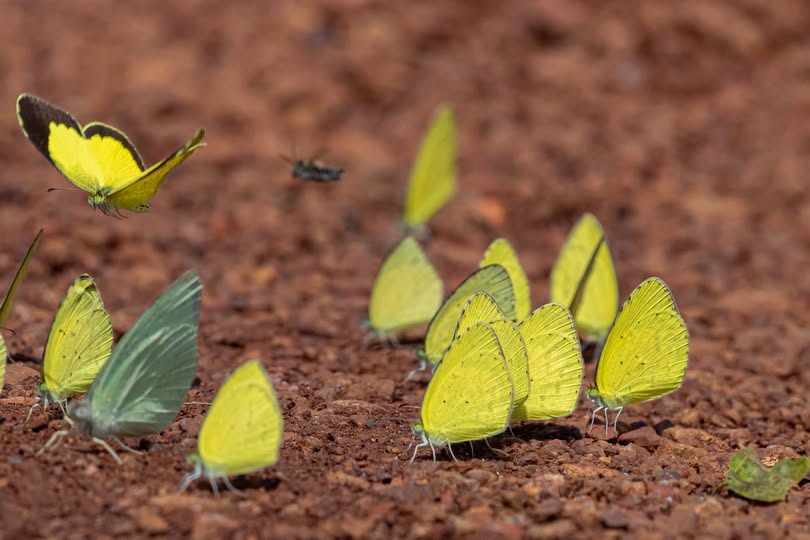
Thousands of yellow and white butterflies have been spotted flying across several parts of Sri Lanka, including Colombo, Galle and Ratnapura, attracting widespread public attention and generating considerable discussion on social media.
The striking natural phenomenon is linked to seasonal butterfly migration, influenced by monsoon rainfall, vegetation growth and breeding cycles, according to information shared by Fact Crescendo Sri Lanka.
Sri Lanka generally experiences two major butterfly migration periods, from October to December and again from March to April. During these periods, seasonal rainfall encourages the growth of vegetation, providing suitable food sources and breeding habitats for butterflies. This prompts them to move across different areas in search of favourable conditions, particularly locations suitable for laying their eggs.
Among the species believed to be involved in the current migration are the Lemon Emigrant, Mottled Emigrant, Lesser Albatross and Common Albatross.
Scientific research has also documented significant butterfly migration patterns across the island. A 2024 study published in the scientific journal Taprobanica, involving researchers including Professor Kapila Dissanayake of Sabaragamuwa University, identified major migration routes across 60 locations in Sri Lanka.
The research documented a notable migration route extending from Kumana towards Wilpattu, covering approximately 280 kilometres within three to four days. The findings highlight the scale and significance of butterfly movement across the country's diverse landscapes.
The recent sightings have also revived a longstanding popular belief that butterflies migrate towards Sri Pada (Adam's Peak). However, experts suggest that such gatherings at elevated locations may be associated with a natural behaviour known as hill-topping.
This behaviour occurs when butterflies congregate at elevated points, often using hilltops and mountain ridges as meeting locations to find potential mating partners.
Meanwhile, speculation that large-scale butterfly movements serve as warnings of approaching cyclones or other natural disasters has no established scientific basis.
Although butterflies are sensitive to environmental conditions, including temperature, humidity and wind patterns, their migration movements cannot be considered reliable indicators or predictors of impending natural disasters.
Researchers have also raised concerns about the threats facing butterfly populations and their habitats. Climate change, increasingly irregular rainfall patterns and the spread of invasive plant species are among the factors that could affect their breeding environments, food sources and long-term survival.
The current mass sightings across Sri Lanka are therefore understood to be part of a natural seasonal migration cycle, reflecting the relationship between butterfly behaviour and changing environmental conditions, rather than signalling an approaching natural disaster.
The spectacular movement of these delicate insects offers a reminder of Sri Lanka's rich biodiversity and the importance of protecting the natural habitats that sustain its butterfly populations.
Source: Serendib News