THE LEADERSHIP OF CHANGE
By Suresh Abbas · · Sri Lanka
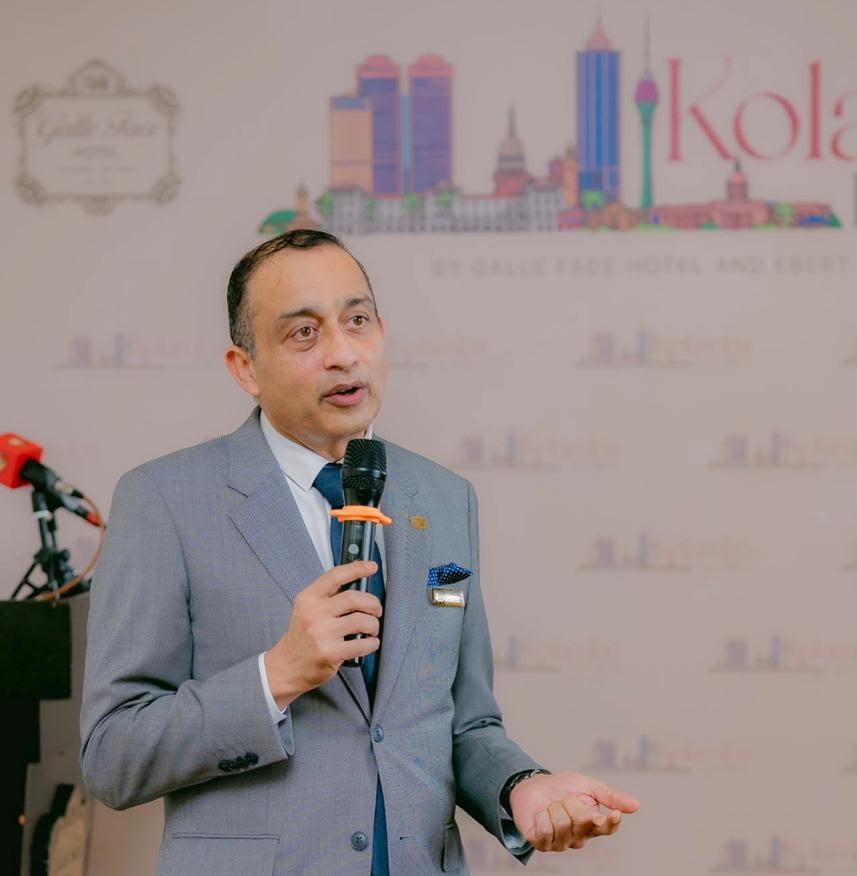
From Managing Change to Leading Transformation
Suresh Abbas
Corporate & Hospitality Leader
Good morning.
Let me begin with a question.
What if the biggest mistake we make about change… is thinking that change is something we can manage?
We call it Change Management.
We create the plan.
We set the timeline.
We allocate the resources.
We create the milestones.
And then we measure whether we are on track.
But there is something we often forget.
Organisations don’t resist project plans.
People resist what they fear they will lose.
Their role.
Their relevance.
Their influence.
Their competence.
Sometimes, simply… their sense of security.
And that is why I believe we need to look at change differently.
Because Change Management manages the mechanics.
Change Leadership mobilises the people.
And Change Innovation asks an even more uncomfortable question:
Are we changing the right things-or simply becoming better at doing yesterday’s things?
THE 1,000-HORSEPOWER CAR
Imagine I hand you the keys to a 1,000-horsepower car.
Beautiful machine.
Extraordinary technology.
Unbelievable power.
And I say:
“Drive.”
Would you get in?
Perhaps.
But before you put your foot on the accelerator, wouldn’t you ask:
Who is driving?
How experienced are they?
Do they understand the power beneath their foot?
Can they control the vehicle at high speed?
Do they know when to accelerate?
And perhaps most importantly…
Do they know when to brake?
Now think about what we are doing inside organisations.
We are giving people extraordinary horsepower.
Artificial intelligence.
Automation.
Data.
Technology.
Capital.
New strategies.
New structures.
New expectations.
And then we say:
“Transform.”
But sometimes…
we haven’t developed the driver.
We haven’t built the capability.
We haven’t created the confidence.
We haven’t explained the destination.
And we haven’t given people ownership of the journey.
Then, when the organisation doesn’t move fast enough…
we blame the driver.
Perhaps the problem isn’t the horsepower.
Perhaps we never taught the driver how to handle it.
KOTTER AND THE HUMAN SIDE OF CHANGE
I want to acknowledge the profound influence of Professor John Kotter of Harvard, whose pioneering work on leading change has shaped the thinking of leaders and organisations around the world.
His eight-step framework gave us something much more valuable than a process.
It gave us a reminder:
Transformation is fundamentally human.
Create urgency.
Build a coalition.
Create a vision.
Mobilise people.
Remove barriers.
Create short-term wins.
Build momentum.
And anchor the change in culture.
But today’s world presents an even bigger challenge.
We don’t change once and return to stability.
We change continuously.
AI changes how we work.
Technology changes how we operate.
Generations change how we lead.
Guests change how they consume.
Economics changes what is possible.
And disruption changes the rules.
So the leadership question has evolved.
It is no longer simply:
“How do I manage change?”
It is:
“How do I build an organisation capable of changing continuously?”
CHANGE MANAGEMENT. CHANGE LEADERSHIP. CHANGE INNOVATION.
For me, there are three different questions.
Change Management asks:
How do we implement this?
Change Leadership asks:
How do we bring people with us?
And Change Innovation asks:
What should we change next—and why?
We need the discipline of management.
We need the courage of leadership.
And we need the curiosity of innovation.
Because there is a danger in becoming exceptionally good at improving something that should no longer exist.
We can make yesterday’s process faster.
Cheaper.
More efficient.
More automated.
More measurable.
And still…
be going in the wrong direction.
THE HOSPITALITY LESSON
I have spent almost four decades in hospitality.
And hotels are perhaps one of the greatest laboratories for understanding change.
Because everything changes.
The guest changes.
The employee changes.
Technology changes.
Distribution changes.
Expectations change.
Competition changes.
But one thing doesn’t change.
Hospitality is still human.
You can install the most sophisticated technology in the world.
But someone still has to welcome the guest.
Someone still has to notice that a guest is uncomfortable.
Someone still has to solve the problem nobody put into the system.
And someone still has to care.
That is why I believe technology should never replace humanity.
It should amplify humanity.
THE FIRE
But there is another problem with transformation.
Everybody can light a fire.
A new CEO can light a fire.
A new strategy can light a fire.
A new technology can light a fire.
A crisis can light a fire.
A town hall can light a fire.
And for a while…
everyone is excited.
Everyone is motivated.
Everyone believes.
But then six months pass.
The excitement disappears.
The difficult conversations begin.
People become tired.
The quick wins are no longer quick.
And the old habits begin to return.
That is when leadership is tested.
Because transformation isn’t a moment.
Transformation is sustained momentum.
A leader therefore has two responsibilities.
Light the fire.
And then…
protect the fire.
Give people a reason to believe.
Give them the capability to act.
Remove the barriers that suffocate them.
Recognise progress.
Celebrate the small victories.
And keep reminding people why the journey matters.
Because culture is not created by what we announce.
Culture is created by what we consistently reinforce.
THE DRIVER, THE VEHICLE AND THE FIRE
So let us return to our 1,000-horsepower car.
You can have the most powerful engine.
You can have the best technology.
You can have the perfect strategy.
But horsepower without a capable driver is dangerous.
And even the best driver eventually stops…
if there is no fuel.
So perhaps the leadership equation for the future is simple.
Strategy gives us direction.
Innovation gives us horsepower.
Change gives us movement.
Culture keeps the fire burning.
And…
Leadership puts a capable human being behind the wheel.
THE REAL LEADERSHIP QUESTION
So perhaps the future will not belong to the organisation with the most technology.
Or the most capital.
Or even the most horsepower.
Perhaps it will belong to the organisation that develops…
the best drivers.
People who can think.
People who can adapt.
People who can learn.
People who can lead.
People who can make decisions when the road changes.
And people who understand that leadership isn’t about having all the answers.
It is about creating an organisation where people have the courage to find the answers together.
So when you return to your organisations tomorrow, ask yourself three questions:
Do we have the horsepower?
Have we developed the drivers?
And…
when the initial excitement disappears, who will keep the fire burning?
Because the future isn’t waiting for us to become comfortable.
The road is changing.
The vehicle is getting faster.
The horsepower is increasing.
And the destination is moving.
So we don’t need fewer changes.
We need better leaders of change.
And perhaps that is the real challenge of leadership.
Not simply to build a powerful organisation…
but to build people capable of handling its power.
Not simply to start transformation…
but to sustain it.
Not simply to light the fire…
but to keep it alive.
Because…
everybody can light a fire.
Great leaders build organisations that know how to keep it burning.
Leading people. Transforming organisations. Keeping the fire alive.