Tanker Rates Soar to Record as Oil Crisis Becomes Shipping Crisis
· World
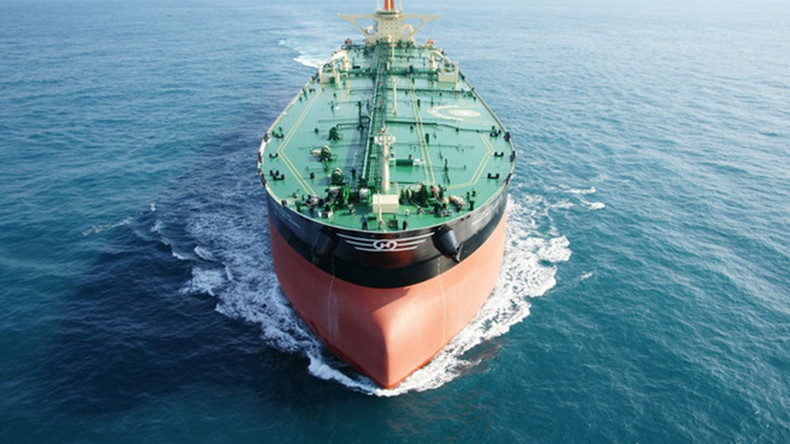
The cost of shipping crude oil soared to record highs last month as the Iran war reshuffled trade routes and patterns and tied up more tankers in inefficient and lengthy voyages.
Supertanker rates soared in September to above $1 million per day on the Persian Gulf to China routea record high.
The September record was soon smashed as freight rates soared by another 40% in the first week of October alone, to top $1.4 million per day on the Gulf to East Asia trip this week, according to data compiled by Bloomberg.
The increased flows of oil from the Strait of Hormuz, mostly thanks to ship-to-ship STS transfers in the Gulf of Oman, are tying up supertankers for weeks waiting for the transfers outside the Strait, limiting the availability of very large crude carriers VLCCs for the other global key oil trade routes, such as the U.S. Gulf Coast to Asia.
The inefficient oil loadings in the Middle East and the very tight supertanker market resulting from these have created a ripple effect extending to the market of smaller vessels, Aframax and Suezmax, whose demand and daily rates have also surged amid a shortage of supertankers.
Thus, the Iran war and the oil crisis has also turned into a full-blown shipping crisis, with record rates being smashed nearly every day. Sky-high rates add millions of U.S. dollars to the cost of a single crude oil cargo, further fueling oil and fuel prices.
Related U.S. Oil Drilling Continues to Inch Upward
The shuttle-shipping through the Strait of Hormuz is "very inefficient," Russell Hardy, chief executive officer at the world's biggest independent oil trader, Vitol, said at the Energy Intelligence Forum in London this week.
"We started this conflict with a crude crisis. Then it turned into a product crisis. Now we have more crude oil coming out of the Middle East, but it is turning into a shipping crisis," Hardy added.
"There is really not quite enough shipping to go around," the executive noted.
Rates on the U.S. Gulf-to-Japan route are skyrocketing and one supertanker has been reportedly offered at a total fee of $82 million for the journey, up by 50% from just three weeks ago, Bloomberg reports.
Commodity trading giant Trafigura has reportedly chartered a supertanker to ship crude from the U.S. Gulf Coast to China at a total fee of $76 million, a source with knowledge of the fixture told CNBC this week.
The $76-million tanker fee is ten times higher than $7 million to $10 million in pre-war times. This suggests the freight cost of the journey is now about $38 per barrel of oil.
Many tankers of the global fleet are now engaged in the STS transfers outside the Strait of Hormuz and with flows rebounding, more are tied up on this route, leaving the rest of the market very low on vessels to ship oil from other parts of the world.
The record rates to ship crude out of the Persian Gulf and from the Gulf of Oman are luring tankers to the risky but very lucrative Middle East trade, leaving the market short on vessels elsewhere.
The supertanker crunch has also prompted a rally in daily rates for Aframax and Suezmax, too, as oil producers and buyers are moving into the smaller vessel market amid very tight supertanker availability.
"Oil supply continues to increase, and shipping data shows regional crude exports from the Middle East actually exceeded pre-war levels on several days in late September," shipbroker Fearnleys said in its weekly report on Wednesday.
"The VLCCs smaller sisters, Suez- and Aframaxes, are showing no sign of slowing down either so there's really nowhere to hide right now," Fearnleys analysts said.
"As shipping costs climb, the economics of oil trading are becoming increasingly strained," Argus experts said on Thursday.
"Freight premiums are adding tens of dollars per barrel to delivered crude costs, raising questions about demand destruction and the sustainability of current market pricing."
Source: OilPrice.com