Sarvajana Balaya Questions Solar Energy Policy and Warns of Threats to Civil Liberties
· Sri Lanka
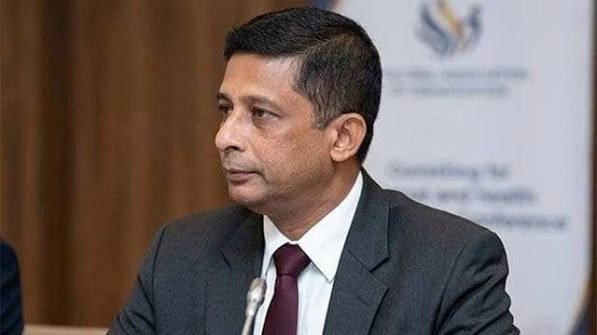
Representatives of Sarvajana Balaya have raised concerns over Sri Lanka's solar energy policy, the proposed Prevention of Terrorism (Special Provisions) Act (PSTA) and what they described as an increase in repressive legislation.
The concerns were expressed at a media briefing attended by party executive council member Prabath de Alwis, Kelaniya electorate organiser Attorney Nalin Pathirana and Vasura Ariyasena, among others.
Solar Energy Investment and Battery Storage
Speaking at the briefing, Prabath de Alwis said Sri Lanka had approximately 3,500 megawatts of solar power capacity, describing it as an investment made with the money of Sri Lankan citizens.
He argued that the government had a responsibility to ensure that investors received an appropriate return on their investments, warning that uncertainty surrounding the sector could discourage future investment.
De Alwis also expressed concern over the lack of adequate battery storage facilities and called for reductions in taxes on batteries.
He claimed that making better use of existing solar power installations could reduce the country's reliance on fuel-based electricity generation and lower the amount spent on fuel.
Comments on Religion and Cultural Practices
De Alwis also spoke about the role of Buddhism in Sri Lankan culture and expressed concern over what he described as a lack of respect for Buddhist clergy.
He questioned whether removing a monk's robe was something that should be welcomed, highlighting the cultural and religious significance attached to the robe in Sri Lankan society.
He further commented on the use of public gatherings to gain political advantages, arguing that different groups could attempt to benefit politically from events that bring together sections of the public.
Addressing traditional beliefs and practices, including charms and rituals associated with sorcery, he said such practices had existed in Sri Lanka for centuries. He argued that censorship alone was not sufficient to address these matters and that alternative approaches should be considered.
Attorney Nalin Pathirana Criticises Proposed PSTA Bill
Attorney Nalin Pathirana, the party's Kelaniya electorate organiser, criticised the proposed PSTA legislation, raising concerns about its potential impact on civil liberties and human rights.
He said the earlier Prevention of Terrorism Act had faced criticism because of alleged human rights violations and the way its provisions had been used against minority communities.
Pathirana argued that the proposed legislation did not adequately address these concerns and warned that its provisions could give the executive excessive power to carry out arrests.
He also raised concerns about judicial oversight and the ability of human rights institutions to monitor individuals detained under the proposed law.
Pathirana called for the proposed legislation to be defeated, arguing that protecting individual freedoms and ensuring proper legal safeguards should remain priorities.
These remarks reflected the party's position on the proposed bill; the precise scope of the legislation and its safeguards would need to be assessed against the text of the draft itself.
Concerns Over Further Legislation
Vasura Ariyasena also criticised the government's handling of recent developments, referring to several significant events that had occurred over the preceding two weeks.
He expressed concern over the killing of an elephant and alleged that the government's response had lacked sufficient sensitivity.
Ariyasena also linked the introduction of the proposed PSTA legislation to broader concerns about the government's approach to public security and civil liberties.
He further claimed that the government was preparing legislation aimed at preventing organised crime, arguing that the introduction of additional laws with potentially restrictive provisions required careful scrutiny, particularly given Sri Lanka's economic difficulties.
The media briefing concluded with criticism of the government's proposed legislative direction and calls for greater attention to civil liberties, energy policy and the protection of public interests.
Source: Serendib News