Sajith Premadasa Criticises Government Over Colombo Flooding, Calls for Modern Drainage System
· Sri Lanka
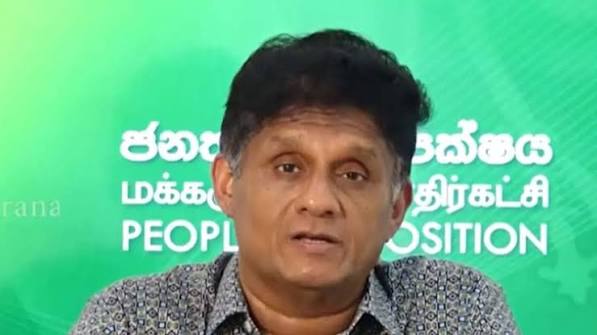
Opposition Leader Sajith Premadasa has criticised the government over its handling of flooding in Colombo, claiming that despite promises to bring about a “renaissance” within six months, the authorities had failed even to ensure that the city’s drainage system was properly cleaned and maintained.
Making a special statement, Premadasa said recent heavy rainfall had left large parts of Colombo inundated. He pointed out that the Mayor had stated that the city’s existing drainage system was designed to cope with rainfall of between 30 and 50 millimetres.
According to Premadasa, experts had identified problems with water drainage as a major factor behind the flooding, highlighting the need to repair, upgrade and regularly maintain the existing drainage network.
He noted that approximately 120 millimetres of rain had fallen during the recent spell, with particularly high rainfall intensity. However, he cited meteorological records indicating that Colombo had experienced heavier rainfall in previous years, including in 1992, 2005 and 2016. He also referred to recorded rainfall totals of 493.7 millimetres in 1993 and 440.2 millimetres in 2010, arguing that similar catastrophic conditions had not occurred on those occasions.
Premadasa attributed the recent flooding to shortcomings in the development and maintenance of Colombo’s drainage infrastructure, including the failure to remove accumulated waste from drains. He said these issues had contributed to the difficulties faced by a large number of residents.
He further stated that, had the Samagi Jana Balawegaya been in power, it would have introduced an integrated stormwater drainage system based on modern approaches used in countries such as Singapore.
The proposed system, he explained, would include an expanded drainage network, rainwater collection facilities, underground water storage tanks, pumping and diversion systems, and green infrastructure.
He also referred to flood-management methods used in the Netherlands, including underground water storage, large-scale pumping facilities, flood barriers and river-widening projects. Premadasa said Sri Lanka should study such international approaches and adapt suitable technologies to its own requirements to better manage flooding caused by heavy rainfall.
The Opposition Leader stressed that the priority should be to prevent a recurrence of similar disasters rather than engage in political blame. He also argued that solutions could not be developed by excluding the Opposition from discussions, questioning why the government, which holds a parliamentary majority, had not addressed the longstanding infrastructure concerns.
He concluded by urging the public to move beyond political slogans and support policies based on what he described as a practical and truthful vision for the country.
Source: Serendib News