Road Accidents Claim Lives of Sri Lanka’s Young Workforce, SLMA Warns
By Serendib News · · Sri Lanka
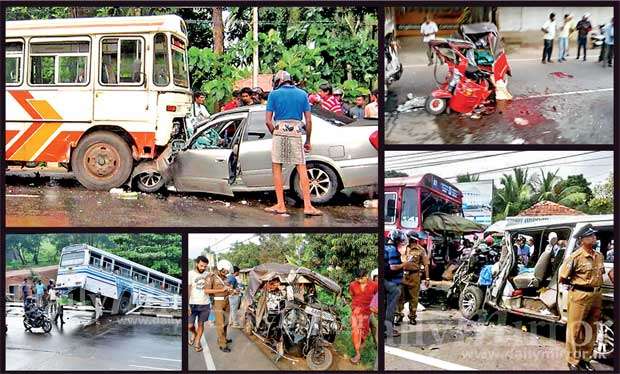
The Sri Lanka Medical Association (SLMA) Expert Committee on Road Traffic Accident Prevention has warned that a significant proportion of those killed in road accidents are between the ages of 15 and 40, representing a major part of the country’s workforce.
The committee also noted that pedestrians and cyclists account for a large proportion of those killed in road accidents.
It stressed that road discipline should be instilled from school age and that media organisations should also conduct public awareness programmes on road safety.
A special discussion on preventing road traffic accidents was organised and conducted by the Sri Lanka Medical Association’s Expert Committee on Road Traffic Accident Prevention.
The discussion focused on the loss of life, injuries and economic impact caused by road traffic accidents in Sri Lanka.
Participants also discussed strengthening road accident prevention measures, increasing public awareness and promoting responsible road use.
The discussion was held under the leadership of the President of the Sri Lanka Medical Association.
Senior Professor Ishanda de Soysa, President-Elect, Sri Lanka Medical Association, said that around eight to nine people die every day due to road accidents, while approximately twice that number suffer serious injuries. Many victims require emergency surgical procedures and are admitted to intensive care units. The National Hospital has a separate section for accident cases, and most admissions are due to road accidents. Dedicated operating theatres and intensive care facilities are available for emergency accident cases. Pedestrians are among those most frequently involved in accidents. People who are travelling at lower speeds also account for a large number of accidents. Bicycles and motorcycles are the next major categories. Helmet legislation was introduced in the 1980s. There are particular issues regarding helmets for young children, and we have introduced projects to address these concerns.
Dr. Ruwan Thushara, Convener, SLMA Expert Committee on Road Safety said that around 3,000 people die due to road accidents each year. There is a significant amount of money allocated from the Treasury for healthcare. Since 2009, more than 40,000 people have died on the roads. The highest number of deaths is among people between the ages of 15 and 40. These are members of our workforce. If these people become disabled as a result of accidents, considerable effort and resources are required to support them. We believe that by 2030, we will be able to reduce these numbers considerably.
Dr. Kapila Sooriarachchi
Communication Specialist and Chairman, Media Committee, Sri Lanka Medical Association said that there are several aspects that need to be considered. We need to focus on our responsibilities and the duties that we must fulfil. Road accidents cause damage not only to the health sector but also to the economy. They can also have significant economic consequences for families.
Dr. Manilka Sumanathilake, President of the Sri Lanka Medical Association, said that more than half of the people killed in road accidents are involved in motorcycle-related accidents. Although the law permits two people to travel on a motorcycle, in some cases as many as four people travel on one motorcycle. Parents also sometimes travel with their children without ensuring that everyone is wearing a helmet. There is no proper system in place to ensure that drivers get adequate rest. Drivers spend many hours behind the wheel, particularly those operating long-distance buses. Testing for drugs and alcohol needs to be increased. We have proposed making the use of pedestrian walkways mandatory where they are available. We have also proposed checking the roadworthiness of buses. No matter how many laws are introduced, discipline among road users must be developed. Road discipline needs to be taught from school age, starting with basic practices such as how and where to cross the road.
Source: Serendib News