Purity of the Fatherland Calls for Compensation for Colombo Flood Victims, Similar to Easter Attack Victims
· Sri Lanka
The Pivithuru Hela Urumaya has called on the Government and Colombo Mayor Vraie Cally Balthazaar to personally compensate residents affected by the recent flooding in Colombo, arguing that administrative failures rather than rainfall alone were responsible for the disaster.
Speaking at a media briefing, a representative of the party said Colombo experienced unprecedented flooding on Friday, November 6, despite the city having faced even heavier rainfall in previous years.
The speaker criticised the Mayor's explanation that Colombo's drainage system could not withstand rainfall exceeding 35 millimetres, while approximately 129 millimetres of rain had fallen on November 6.
He described the explanation as an attempt to shift responsibility and argued that historical rainfall records contradicted the claim that the recent rainfall was unprecedented.
He cited historical rainfall data to support his argument, stating that Colombo received 494 millimetres of rain on June 4, 1992, making it the heaviest rainfall recorded in the city since 1991. He also referred to the 440 millimetres recorded on November 10, 2010.
He further claimed that several days in November 2005 and 2009 recorded rainfall exceeding 200 millimetres. According to a World Bank report examining rainfall in Colombo, there were 19 days between 2006 and 2014 on which rainfall exceeded 100 millimetres.
He argued that these records demonstrated that Colombo had experienced heavy rainfall on numerous occasions and questioned the Mayor's explanation that the city's drainage system was unable to cope with the November 6 rainfall. However, he acknowledged that the recent rainfall had fallen within a particularly short period.
The speaker also criticised the condition of Colombo's drainage and waste management systems, alleging that accumulated garbage across the city was being washed into drains during heavy rain, causing blockages.
He further claimed that unauthorised constructions had obstructed canals and drainage routes, while several pumps used to remove rainwater had reportedly remained out of operation for months. He argued that these shortcomings had contributed significantly to the flooding.
Describing the situation as a failure of the Colombo Municipal Council, he questioned the Mayor's ability to manage a city with a large population, making remarks about her previous management experience.
Turning his criticism towards the Government's Clean Sri Lanka programme, he alleged that despite substantial public expenditure on the initiative and extensive publicity, the programme had failed to deliver the expected improvements in urban cleanliness.
He claimed that the recent flooding had exposed shortcomings in waste management and drainage maintenance, arguing that public funds had been spent on promoting the programme without adequately addressing the city's underlying problems.
Calls for Compensation for Flood Victims
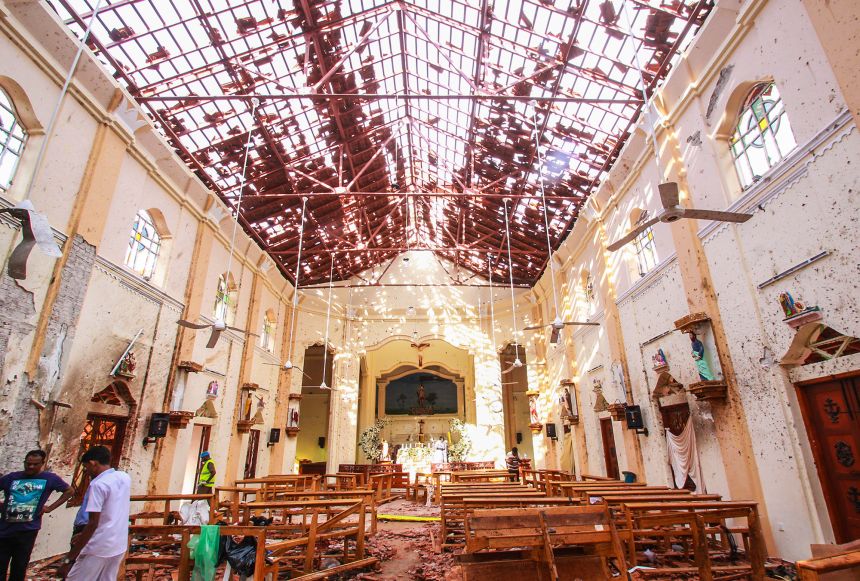
The speaker also called for compensation to be paid to residents affected by the flooding, drawing comparisons with the Supreme Court's ruling requiring former President Gotabaya Rajapaksa and other senior officials to pay compensation to victims of the Easter Sunday attacks.
He also referred to the Supreme Court's ruling concerning the economic crisis, arguing that public officials and political representatives who had acted negligently should be held personally accountable for the consequences of their actions.
On that basis, he argued that the President, who oversees the Clean Sri Lanka programme, and the Colombo Mayor, who is responsible for the city's cleanliness and the removal of unauthorised constructions, should compensate those affected by the flooding.
He further suggested that if they were unable to make the payments personally, compensation should be provided through the funds available at the NPP headquarters in Pelawatte.
He also criticised the Mayor's argument regarding the intensity of the rainfall, sarcastically suggesting that rain could not be expected to fall in smaller instalments simply to accommodate the capacity of the city's drainage system.
Cites Previous Colombo Flood Prevention Measures
Referring to the major floods of November 10, 2010, the speaker recalled that rainfall on that occasion had even inundated Parliament, requiring military Buffalo vehicles to transport MPs out of the parliamentary complex.
He said that following the 2010 floods, then Secretary to the Ministry of Defence and Urban Development Gotabaya Rajapaksa had initiated a programme aimed at preventing Colombo from experiencing similar flooding in the future.
He claimed that at the time, Colombo was struggling with serious waste management problems, including the growing garbage mountain at Bloemendhal.
According to the speaker, the previous administration removed accumulated garbage dumps within a year, introduced strict regulations against indiscriminate waste disposal and implemented measures to improve the city's drainage system.
He also said that residents occupying low-lying areas were provided with alternative housing in apartment complexes, while unauthorised constructions obstructing canals and waterways were removed regardless of the political or financial influence of those responsible.
He further highlighted the construction of retention ponds around Colombo to collect rainwater and reduce the risk of flooding.
Claiming that these measures had helped prevent Colombo from experiencing similar flooding for years, he urged the present NPP administration to stop making excuses and take immediate action to address the city's drainage, waste management and flood prevention problems.
Source: Serendib News