President directs New Drug Control Law to be passed by October
· Sri Lanka
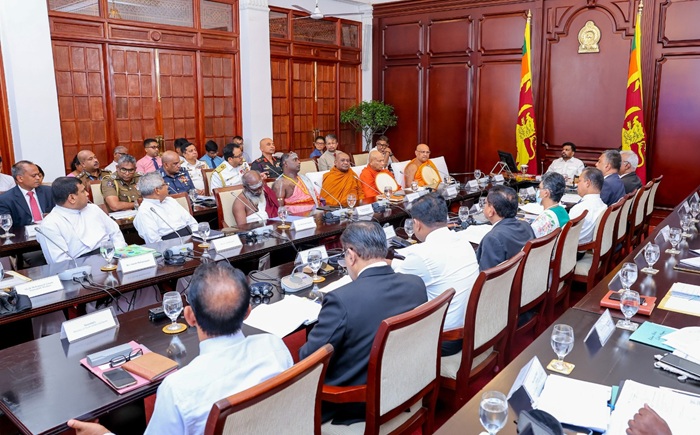
President Anura Kumara Dissanayake has instructed officials to take steps to have the new drug control legislation already presented to Parliament passed by the third week of October, as part of the government’s efforts to combat the drug menace in Sri Lanka.
The President instructed that the proposed legislation be referred to the relevant parliamentary committee during the first week of October to obtain approval, with measures thereafter to have it passed by Parliament by the third week of the month.
The instructions were issued during a meeting of the “A Nation United” National Operations Council, established to eradicate the dangerous drug menace from the country, held at the Presidential Secretariat today (30).
Meanwhile, it was revealed at the meeting that 8,000 Government Analyst reports relating to drugs had been completed during September alone, following measures to expand facilities and improve efficiency at the Government Analyst’s Department.
The number of Government Analyst reports issued daily has increased, while data-entry operations have also been accelerated with the assistance of Navy personnel.
It was further revealed that improvements in obtaining Government Analyst reports have enabled a significant number of individuals imprisoned over drug-related offences to be released on bail, helping to reduce overcrowding in prisons.
The President also instructed officials to develop a strong mechanism to directly educate parents about the seriousness of the drug menace and how to monitor changes in their children’s behaviour.
President Dissanayake said protecting children from drugs depends on a strong parent-child relationship rather than relying on the law alone, stressing the need to actively involve parents in efforts to protect children.
He also pointed out that parents need access to a trustworthy person when they believe their child may be at risk of drug use.
Noting that parents often turn to teachers or religious leaders in such situations, the President called for a systematic programme capable of providing reliable guidance. He also highlighted the need to provide specialised training to teachers if they are to be involved in the programme.
Attention was also drawn to the 1818 hotline, which has been introduced for the public to provide information on drug trafficking, distribution and related illegal activities.
The President stressed the importance of keeping the hotline actively operational and building public confidence in the system.
He also called for a public awareness programme highlighting the action taken in response to information received through the 1818 hotline, in order to strengthen public trust and encourage the reporting of drug-related activities.
Meanwhile, the President emphasised the need to further strengthen operations aimed at dismantling drug distribution networks.
The meeting also discussed plans to develop a centralised digital system connecting the Police, Government Analyst’s Department, Department of Prisons and the judicial system.
The President instructed officials to discuss the practical issues surrounding the proposed system with the Defence Secretary and other relevant officials and take steps to resolve them.
Attention was also drawn to providing facilities, in accordance with Act No. 07 of 2025, to allow expert reports and Government Analyst reports to be sent directly to courts via email.
The President also reviewed measures being taken to fill vacancies at the Legal Draftsman’s Department.
Programmes being implemented in international schools to combat the drug menace and their effectiveness were also reviewed during the meeting.
President Dissanayake further highlighted the need for social media awareness programmes targeting young people to educate them about the dangerous consequences of drug use.
The meeting also discussed drug-related challenges in the Northern and Eastern regions following the war and ongoing programmes aimed at addressing the issue.
Progress in the rehabilitation process was also reviewed, including measures to increase the capacity of rehabilitation centres. (Newswire)
Source: Newswire LK