Opposition Group Questions Government’s Economic Policy, Says Budget Neglects Household Financial Pressures
· Sri Lanka
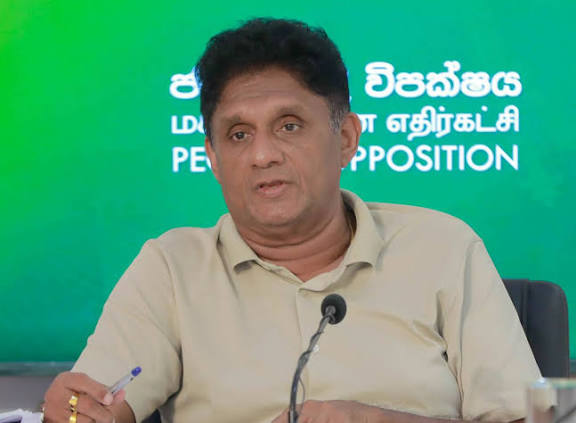
The Dinana Dakuna Collective has criticised the government’s latest national budget, arguing that its focus on restoring the country’s fiscal position has come at the expense of household finances and the living standards of ordinary Sri Lankans.
In a statement outlining its position on the budget, the collective questioned whether the government was sacrificing household economic well-being to improve the state’s financial balance sheet. It also argued that the budget lacked a clear strategy for translating recent economic stabilisation into broader economic growth and improved living conditions.
The Finance Minister, who is also the President, has stated that the government expects to transform the economic stability achieved so far into an economic transformation by 2027. However, the collective pointed to the reported inflation rate of 8.2 per cent as of October 2026, questioning the compatibility of that figure with the government’s economic ambitions.
According to the collective, the government has continued with the same macroeconomic management approach pursued over the past two years, prioritising the restoration of public finances while giving insufficient attention to the financial difficulties faced by individual households.
It argued that salary and allowance increases for public sector employees, who account for approximately 10 per cent of the population, could not be presented as a solution to the economic difficulties experienced by the wider population. The collective claimed that nearly 80 per cent of the population continued to face economic hardship without a clear government programme to address their concerns.
The statement further alleged that the improvement in the country’s public finances and foreign exchange position had been achieved at a significant cost to citizens’ living standards.
The collective also criticised the government's approach to taxation, claiming that a disproportionate share of the tax burden had been placed on consumers rather than individuals and businesses generating wealth. It said the budget had failed to establish an adequate environment to encourage investment, wealth creation and economic activity.
While the government has highlighted a capital investment allocation of Rs. 2 trillion, the collective argued that a substantial proportion of the allocation had been directed towards road construction, raising questions about the extent to which such investments would generate direct economic benefits for ordinary citizens.
It further claimed that the government had failed to adequately address income inequality, pointing to what it described as insufficient taxation of higher-income groups and an excessive reliance on indirect taxes imposed on ordinary consumers.
The collective also raised concerns over the pricing of essential public utilities, including fuel, electricity and water. It argued that consumers were being charged high prices partly to cover the operational losses of state-owned enterprises, rather than the government undertaking sufficient institutional reforms to reduce those losses and improve efficiency.
According to the statement, higher utility costs have further weakened the purchasing power of households and businesses, restricting their ability to spend and invest.
The collective warned that deliberately reducing consumer purchasing power could have wider economic consequences, particularly by weakening domestic production and limiting business activity. It also argued that the decline in import expenditure should not automatically be interpreted as evidence of increased domestic production, suggesting instead that reduced purchasing power had limited people's ability to purchase essential goods, including fuel, milk powder and vehicle spare parts.
The statement further highlighted the impact of the 18 per cent Value Added Tax (VAT) on low- and middle-income households, claiming that families in these income groups spend between 90 and 100 per cent of their earnings on essential living expenses.
It maintained that reducing the VAT rate or exempting selected goods alone would not be sufficient to address the broader economic pressures facing the population.
Instead, the Dinana Dakuna Collective called for an economic strategy focused on strengthening the supply side of the economy through increased domestic production, more efficient supply chains, lower production costs and expanded export capacity.
It argued that the government's current approach was focused too heavily on suppressing demand rather than expanding the country's productive capacity.
While acknowledging the importance of fiscal stability, the collective stressed that restoring the state's financial position should not come at the expense of citizens' living standards.
It called for an economic framework that encourages wealth creation, generates employment, promotes investment and protects people's purchasing power.
"The restoration of the state's financial accounts should not be the ultimate objective of the economy. Its real objective should be to restore the lives of its citizens," the collective said.
Source: Serendib News