Opposition Calls for Transparency in Fuel Pricing Formula, Questions Government’s Fuel Subsidy Claims
· Sri Lanka
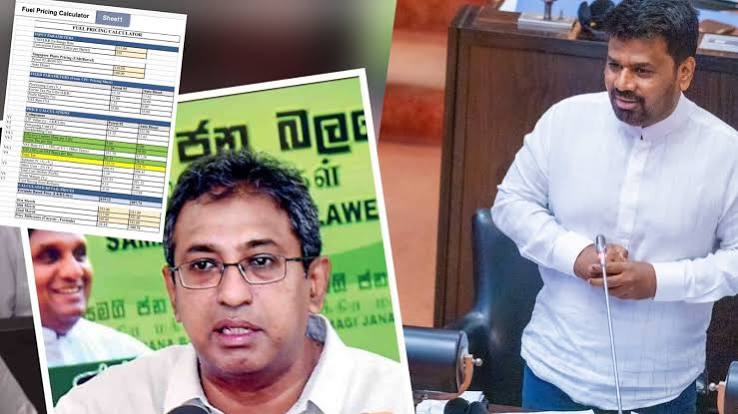
Speakers at a media briefing organised by the Janathawadiya United Opposition called on the Government to provide greater transparency over its fuel pricing formula and raised concerns over Sri Lanka’s foreign policy and energy policies.
Professor G. L. Peiris said the Sri Lankan Government should act in accordance with established foreign policy practices to secure the release of Anojan.
He noted that the BRICS summit of heads of state had been held two weeks earlier and described BRICS as a powerful organisation. He said Sri Lanka’s Head of State had not attended the summit.
Peiris said that when former President Ranil Wickremesinghe attended a previous BRICS-related summit, he had held discussions with Russian President Vladimir Putin. He claimed that, on another occasion, Sri Lanka had sent officials to a summit held in Russia and that the authorities had subsequently considered participation in the organisation to be of limited importance to Sri Lanka. He alleged that this had resulted in Sri Lanka not being invited to the latest summit held in India.
Peiris also referred to the situation involving 15 ships in Iran, claiming that those on board were facing shortages of water and food. He described the situation as a humanitarian issue and said that wrongdoing elsewhere should not be considered justification for similar actions.
Questions over fuel pricing
Former Parliamentarian Patali Champika Ranawaka questioned why President Anura Kumara Dissanayake was reluctant to disclose the fuel pricing formula.
He said diesel and petrol prices had been increased from October 1, with the Government citing the war situation and international market prices as reasons. He also referred to the President's announcement of a Rs. 41 billion relief package for the following three months.
Ranawaka said that on September 14, the Chairman of the Ceylon Petroleum Corporation had stated that there was no need to increase fuel prices because the CPC was making a profit. However, he claimed that the Chairman had subsequently said that prices had to be increased because the losses could not be absorbed.
He described the President's claim regarding the fuel subsidy as false. Ranawaka argued that using tax revenue collected from essential goods, declared-income professionals, and taxes imposed on motorcycle and three-wheeler imports to make payments to the CPC and foreign oil companies should not be considered a subsidy.
He claimed that such a policy amounted to the misuse of tax revenue paid by poorer citizens and a benefit to those using expensive luxury vehicles.
Ranawaka presented calculations based on Singapore Platts prices and the exchange rate, arguing that the prices being charged to consumers required further explanation.
He said that, according to the Singapore Platts prices on October 1, an average barrel of diesel, containing 159 litres, was priced at US$169, while a barrel of 92-octane petrol was priced at US$140. Based on an exchange rate of Rs.330 to the US dollar, he calculated the respective prices as approximately Rs.55,770 and Rs.46,200 per barrel.
He further argued that if the exchange rate had remained at Rs.300 to the US dollar, the corresponding prices would have been approximately Rs.50,700 for diesel and Rs.42,000 for petrol.
Ranawaka said the figures indicated a shipping-related cost of approximately Rs.350 per litre for diesel and Rs.290 per litre for 92-octane petrol under the calculations he presented.
He added that these figures would apply from November 1 because, according to him, the CPC and foreign companies use Singapore Platts prices from the first week of the preceding month when determining prices.
Referring to the September 1 Singapore Platts prices, he said diesel was priced at US$159 per barrel and 92-octane petrol at US$119 per barrel.
He therefore questioned how the final prices had reached Rs.392 per litre for diesel and Rs.414 per litre for 92-octane petrol, and called on the President to explain the calculations through the fuel pricing formula.
Ranawaka said the Government should publicly disclose the profits of importers and the taxes imposed by the Government as part of the fuel pricing structure.
He noted that the methodology used to determine fuel prices had been made public since 2002 and had also been implemented during the 2022–2024 period.
He questioned why the Government was now withholding the fuel pricing formula, asking whether the decision was consistent with the President's stated commitment to high standards of morality and honesty. He also questioned whether the Government was concerned about a complaint before the Bribery Commission relating to alleged irregularities in diesel imports in March 2026.
Ranawaka further alleged that the Government was making high profits by selling heavy fuel and naphtha produced by the refinery to electricity companies at prices ranging from Rs.170 to Rs.210, citing shortages of coal. He claimed that the resulting cost was ultimately being passed on to electricity consumers.
He also alleged that the use of lower-quality coal, together with restrictions on solar power generation, had increased the need for coal and fuel and consequently raised the country's import bill.
The remarks were made at a media briefing of the Janathawadiya United Opposition. The claims regarding fuel pricing, alleged irregularities and government policy were presented by the speakers at the briefing.
Source: Serendib News