Nepal floods: Search continues for people
· India
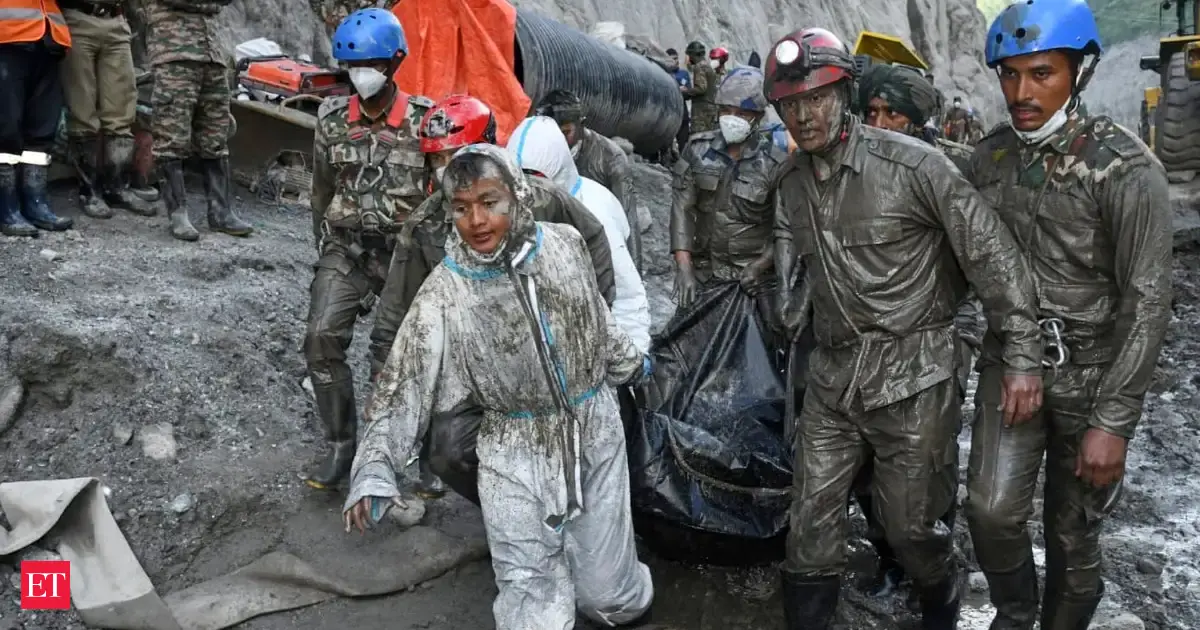
Kathmandu: Search operations continued in Nepal on Sunday for around 6,000 people who are still unaccounted for nearly four weeks after the devastating flash floods that killed more than 1,400.
Flash floods, originating near the Nepal-Tibet border on August 26, devastated towns and villages in northern and central Nepal. The Bhotekoshi River, which flows south from the Himalayan border region, carried the floodwaters downstream, sweeping away homes, vehicles, roads and bridges and damaging hydropower projects.
The floods also killed 43 people on the Chinese side, where more than 500 remain missing, according to Chinese media.
The search in Nepal has continued across river stretches, debris fields and damaged hydropower projects in Rasuwa and neighbouring districts.
At the Upper Trishuli-1 hydropower project in Rasuwa, rescuers have recovered 17 bodies from a tunnel. The bodies were found trapped in reinforcement mesh and buried in mud. Rescuers used grinders, gas cutters and rotary equipment to retrieve them, according to the Nepali Army.
Earlier this month, a Nepal Army field commander said clearing the material from some of the affected tunnels could take three to four months because of the volume and condition of the debris.
The disaster has also left large parts of the affected region struggling with damaged roads and bridges.
The government has begun repairing suspension bridges along the Trishuli corridor after the August 26 flood destroyed or damaged crossings connecting communities in Nuwakot and Dhading.
Repair work had begun on 12 suspension bridges, with another 33 damaged beyond repair and requiring reconstruction, according to a report in The Kathmandu Post. The government aims to reopen the 12 bridges by October 6 and has invited tenders for reconstruction of the other 33.
The damaged crossings have disrupted access to markets, schools, health facilities and other essential services, forcing residents in some areas to take longer routes or rely on temporary arrangements to cross the river.
Identifying the dead has emerged as a major challenge. Of the total bodies recovered, only around 110 have been handed over to families so far after identification, authorities said.
Bodies recovered after being swept downstream have often been severely damaged, decomposed or recovered only in parts, making identification by face, clothing or personal belongings difficult, officials said.
Prolonged immersion in water and exposure to mud and debris can destroy identifiable features, while some remains have been fragmented or mixed with other remains. Forensic experts say DNA testing has therefore become crucial, but it is a time-consuming process requiring samples from the remains and biological relatives for comparison.
So far, nearly 1,300 bodies have been temporarily buried after their DNA samples were collected, officials said.
Source: Economic Times - Top Stories