More fuel price shocks shrouded in secrecy
· Sri Lanka
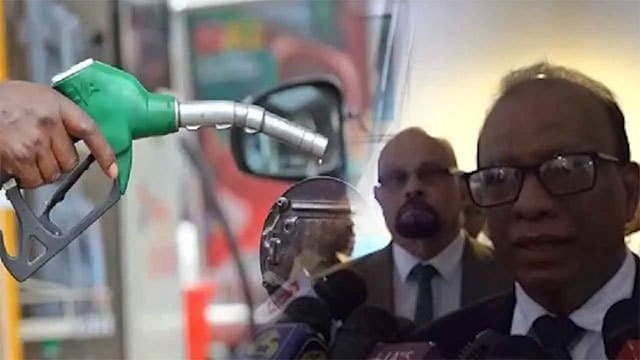
Opposition propagandists are in overdrive trying to portray the JVP-NPP government as an inefficient regime or a kakistocracy. But there are certain tasks it carries out very efficiently, and they include increasing taxes, tariff, and fuel prices. Speculation is rife that another fuel price hike is in the pipeline. Filling stations, operated by some foreign companies, have stopped dispensing diesel, claiming losses, according to media reports.
Opposition-aligned trade unionists and consumer rights groups have claimed that the government is trying to jack up diesel prices on the pretext of preventing losses to foreign petroleum companies so that the cost of running oil-fired power plants to meet Norochcholai’s generation shortfall caused by low-grade coal imports could be passed on to the public. The government stands accused of recovering losses due to procurement rackets by increasing electricity tariffs and petroleum prices.
Norochcholai’s coal quality issues translate directly into lost megawatt-hours, which must be replaced by expensive diesel power generation to avert power cuts. Experts have pointed out that even short durations of this replacement can consume hundreds of thousands of litres of diesel, depleting national stocks and costing billions of rupees.
Maintaining adequate fuel reserves and preventing coal supply shortfalls are critical for the country’s energy security. Delays in coal shipments and quality issues have compounded problems besetting the Norochcholai power complex. When coal power generation dropped due to substandard coal imports, the government should have planned for diesel demand surges while fixing the coal procurement process to minimise recurring shortfalls. Its failure to do so has driven the Ceylon Petroleum Corporation (CPC) to buy diesel at very high prices, as revealed by HSBC Group CEO Georges Elhedery, who told the media that Sri Lanka had once paid as much as USD 286 for (refined) diesel per barrel. The CPC subsequently admitted that it had purchased diesel at the extraordinarily high prices mentioned by the HSBC CEO. CPC Chairman D. J. Rajakaruna claimed that his institution had been left with no alternative but to pay the exceptionally high prices for diesel, as refusing to do so would have resulted in a fuel shortage. What was left unsaid however was that the demand for diesel had surged as oil-fired power plants were being pushed into service to make up for the shortfall in Norochcholai’s generation and avert power cuts.
Now that the government has indicated its willingness to consider increasing fuel prices, in two weeks, filling stations are bound to place bigger orders in the coming days and hoard fuel.
The government’s efforts to conceal the fact that the public has had to bear the losses caused by the coal scam have been in vain. There is no way the coal procurement rackets can be covered up. One may recall the UNP-led Yahapalana government’s attempts to obscure the Treasury bond scams in 2015 by means of aggressive denials and obfuscation failed. In a bid to muddy the water, it used a forensic examination of earlier Treasury bond transactions dating back to 2008 in keeping with a presidential commission of inquiry recommendation. The incumbent government is apparently trying to do something similar to confuse the public. When the coal procurement racket under its watch was exposed, it appointed a presidential commission of inquiry to probe all coal transactions dating back to 2009, when the coal procurement process reportedly began. A wag says that if a JVP-NPP politician happens to be caught with a gun and venison, the government may appoint a commission to investigate deer hunting since the time of King Devanampiyatissa, who encountered Arahant Mahinda while out on a deer hunt.
It is imperative that the government ensure transparency in fuel pricing. The public should be shown the complete cost reflective pricing formula together with the exact international benchmark, exchange rate, landed cost, taxes, levies, CPC costs, any loss-recovery component, etc., every time pump prices are revised. Consumers have a right to know how fuel prices are calculated.
Sadly, the Opposition does not seem keen to address issues concerning lack of transparency in fuel pricing, and the allegation that the government resorts to cost padding to justify price hikes. It is all hat and no cattle, critics say.
Source: The Island