Advanced Sensor Inside FIFA Match Ball Records Every Movement, Spin, and Pass
· World
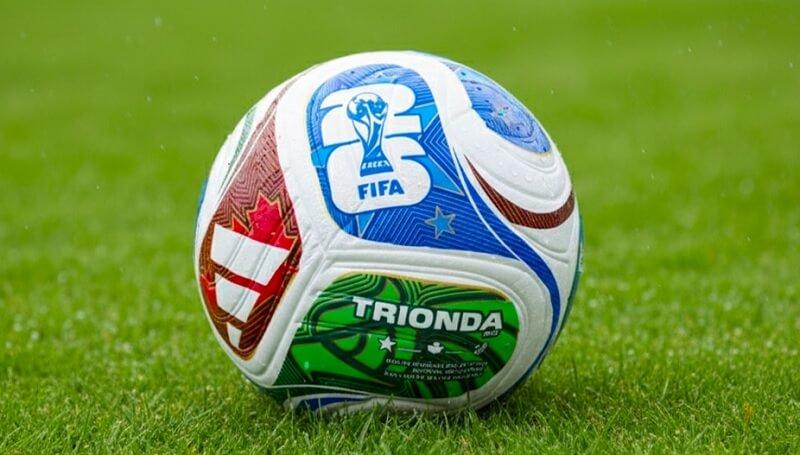
The official match ball for the 2026 FIFA World Cup will feature groundbreaking technology that requires it to be wirelessly charged before every match. Rather than adding lights or sound effects, the ball contains a sophisticated microchip designed to track every movement on the pitch in real time.
What is the Trionda Ball?
The official match ball, named Trionda, takes its inspiration from the Spanish word meaning “three waves,” representing the three host nations of the tournament: Canada, Mexico, and the United States. Its design reflects this theme through red, green, and blue accents, along with national symbols such as a maple leaf, eagle, and star.
Developed by Adidas in collaboration with FIFA, the ball took over three years of research, testing, and refinement before being finalized. Multiple prototypes were evaluated under different playing conditions to ensure optimal performance.
Innovative Design and Structure
Unlike traditional footballs that use 32 panels, the Trionda features just four large panels, making it the most streamlined World Cup ball ever created. This reduced panel design improves roundness and enhances flight stability, minimizing unpredictable movement seen in past tournament balls.
Its surface includes specially engineered seams and textured patterns that improve grip and aerodynamics, especially in wet or humid conditions.
Built-In Smart Sensor Technology
Inside one of the panels lies an advanced inertial measurement unit (IMU) sensor. This miniature computer tracks acceleration, rotation, spin, and every contact with the ball.
The system records data at an extremely high frequency of 500 readings per second, transmitting real-time information to VAR systems and stadium tracking cameras. This allows officials to build a precise digital representation of match events as they happen.
To maintain balance, the sensor is carefully counterweighted within the ball’s structure so it does not affect gameplay.
Wireless Charging System
The Trionda also includes a built-in rechargeable battery. Before each match, it is placed on a wireless charging dock, similar to modern smartphone charging systems.
A full charge powers the ball for several hours, ensuring it lasts comfortably through a full match, including extra time if required. Without this charging process, the ball’s tracking system would not function during gameplay.
Impact on Modern Football
This technology is expected to significantly improve decision-making in football, particularly in areas such as offside rulings and handball incidents. By capturing the exact moment of ball contact, officials can make faster and more accurate judgments when combined with player tracking systems.
It also enhances goal-line decisions and provides teams with valuable performance data, including shot speed, spin rate, trajectory, and passing accuracy. Broadcasters and analysts will also benefit from deeper match insights.
The Future of the Game
While the technology promises greater accuracy and fairness, it also raises questions about how much automation should influence football’s traditional human element. The debate continues between preserving the sport’s emotional unpredictability and embracing data-driven precision.
What is certain is that from 2026 onward, every touch, pass, and strike in the World Cup will be digitally recorded, transforming how the game is analyzed, officiated, and experienced.