El Niño and Sri Lanka: Safeguarding food security in uncertain times
· Sri Lanka
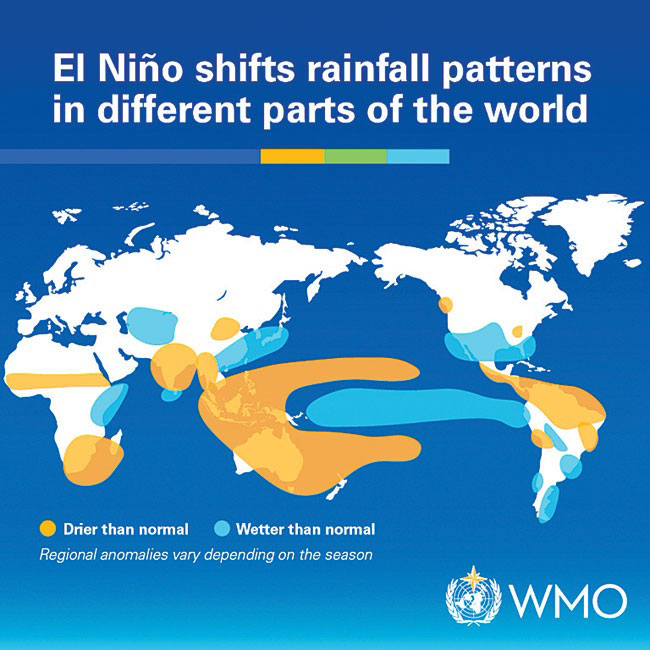
As climate variability becomes an increasing challenge for nations worldwide, Sri Lanka faces growing concerns over the impact of El Niño, a natural climate phenomenon that can disrupt rainfall patterns, increase temperatures, and place additional pressure on agricultural production. For a country where agriculture remains a vital part of the economy and rural livelihoods, preparing for climate uncertainty has become essential to safeguarding food security. Food security includes not only the availability of food but also access to nutritious and affordable food.
Climate-induced disruptions to agricultural production can affect all dimensions of food security. Vulnerable populations, including low-income households and rural communities, are often the most affected by fluctuations in food supply and market prices.
El Niño occurs when sea surface temperatures in the central and eastern Pacific Ocean become unusually warmer than normal, influencing global weather patterns. Although the phenomenon originates thousands of kilometres away, its effects are felt across many regions, including South Asia. According to experts, in Sri Lanka, El Niño events can contribute to irregular rainfall, prolonged dry periods, higher temperatures, and changes in the timing and intensity of monsoon rains.
Sri Lanka’s agriculture sector is particularly vulnerable to these climate fluctuations and faces increasing challenges from climate variability, with the El Niño phenomenon emerging as one of the most significant threats to national food security. As global temperatures continue to rise, understanding and preparing for the impacts of El Niño has become essential for ensuring a stable food supply and protecting the livelihoods of millions of Sri Lankans. Mainly, rice, the staple food of Sri Lanka, depends heavily on reliable water availability.
Reduced rainfall during critical cultivation periods can lead to drought conditions, lower reservoir levels, and can affect paddy yields, while excessive rainfall at unexpected times can damage the crop through flooding, diseases, and poor field conditions. In addition, other crops, including vegetables, fruits, and plantation crops, may also experience productivity losses due to heat stress and water shortages. These impacts can result in food shortages, rising food prices, and reduced incomes for farming communities.
The consequences of climate-related agricultural disruptions extend beyond farmers. Reduced crop production can lead to increased food prices, greater dependence on imports, and challenges in maintaining a stable food supply. For vulnerable communities, especially small-scale farmers and low-income households, these impacts can significantly affect nutrition and livelihoods.
In such circumstances, reducing postharvest losses becomes a critical component of national food security strategies. Food that is produced but lost after harvesting represents wasted land, water, energy, labour, and financial resources invested in the production. In Sri Lanka, significant quantities of fruits, vegetables, grains, and other agricultural commodities are lost due to inadequate harvesting practices, poor postharvest handling, unsuitable storage conditions, inefficient transportation, and limited processing facilities. During periods of climate stress, such as El Niño-induced droughts, these losses become even more serious because the available food supply is already under pressure. Minimising postharvest losses can, therefore, increase food availability without requiring additional land or agricultural inputs. Hence, strengthening postharvest management can make a major contribution to climate resilience. Improved harvesting techniques, better packaging, temperature-controlled storage, efficient transportation systems, and modern processing technologies can extend the shelf life of agricultural products and reduce wastage.
Promoting small-scale processing and value addition can also help farmers preserve surplus production and maintain income during periods of market fluctuations. Achieving food security in an era of climate uncertainty requires a comprehensive approach that considers both production and preservation. Increasing agricultural productivity alone is not sufficient if a significant portion of harvested food is lost before reaching consumers. Reducing postharvest losses should be recognised as one of the most practical, cost-effective, and sustainable solutions for ensuring food availability.
Moreover, Sri Lanka has opportunities to strengthen its resilience against El Niño-related challenges. Improving climate forecasting systems and ensuring that farmers receive timely weather information can help communities make better decisions on planting dates, crop selection, and water management. Climate-smart agricultural practices, such as drought-tolerant crop varieties, efficient irrigation methods, soil conservation, and improved water storage, can reduce risks associated with changing weather patterns. Water management remains one of the most important strategies for climate resilience. Expanding rainwater harvesting, maintaining irrigation systems, and protecting watersheds can help communities manage water shortages during dry periods.
At the same time, Sri Lanka must continue to promote climate-smart agricultural practices. The use of drought-tolerant crop varieties, efficient irrigation systems, soil conservation methods, and improved weather forecasting services can help farmers adapt to changing climate conditions. Providing timely climate information enables farmers to make informed decisions regarding crop selection, planting schedules, and resource management.
Investment in research and innovation will also play a key role. Agricultural institutions and researchers can support farmers by developing technologies and practices suited to changing climatic conditions. Promoting crop diversification can further reduce dependence on a limited number of crops and provide alternative sources of income during periods of climatic stress.
Food security in the face of climate change requires cooperation among government agencies, farmers, researchers, private-sector stakeholders, and communities. Early warning systems, disaster preparedness plans, and supportive agricultural policies can help minimise the effects of extreme climate events. As climate uncertainty becomes the new normal, proactive measures are essential to protect Sri Lanka’s food future. While El Niño presents significant challenges, strategic planning, innovation, and collaboration can help the nation build resilience and ensure that every citizen has access to safe, nutritious, and affordable food. More importantly, policy support is crucial in building a resilient food system. Government agencies, research institutions, and the private sector must work together to develop sustainable agricultural practices and strengthen food supply chains. Diversifying food production and reducing post-harvest losses can also contribute to greater food security.
El Niño is a reminder that climate challenges do not respect geographical boundaries. While Sri Lanka cannot control global climate phenomena, it can strengthen its ability to adapt and respond. By combining scientific knowledge, sustainable farming practices, and effective planning, the nation can protect its food systems and ensure a more secure future in an era of increasing climate uncertainty.
As the climate continues to change, preparedness is no longer an option; it is a necessity for protecting Sri Lanka’s food security and the livelihoods of generations to come.
Source: The Island - Features