Dr Parwinder Kaur makes history in Australia as first sitting woman Member of Parliament elected as ATSE Fellow
· Australia
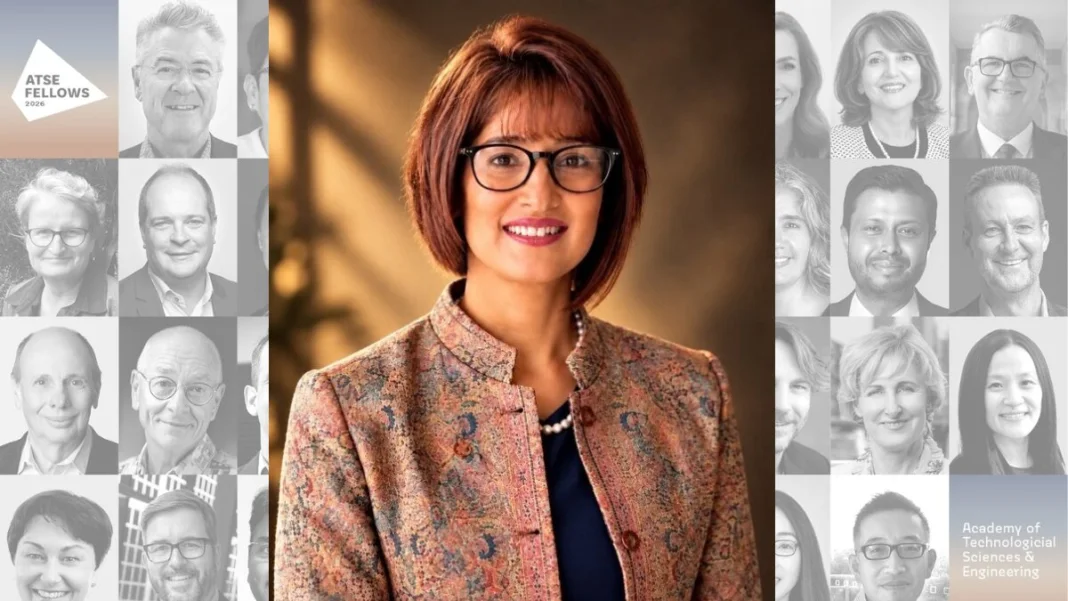
Western Australian scientist and parliamentarian Dr Parwinder Kaur has been elected a Fellow of the Australian Academy of Technological Sciences and Engineering (ATSE), becoming the first woman sitting Member of Parliament in Australia to receive the honour.
Kaur, a Member of the Western Australian Legislative Council, is among 34 new Fellows elected by ATSE in 2026 in recognition of achievements across applied science and engineering, research, industry leadership, policymaking and commercialisation.
Her election also makes her the first sitting Member of the Western Australian Parliament to be elected an ATSE Fellow.
Former Deputy Prime Minister Tim Fischer was the first sitting Member of Parliament elected an ATSE Fellow, in 2000, according to Kaur.
For Kaur, the recognition marks a significant moment in a career that has bridged scientific research, biodiversity conservation, biotechnology and public policy.
“I am incredibly honoured and humbled to be elected a Fellow of the Australian Academy of Technological Sciences & Engineering.”
She said the Fellowship brought together two areas she cared deeply about: science and public service.
ATSE President Dr Cathy Foley said election to the Academy was “one of the highest honours and recognition of achievement in Australian technology and engineering”.
Foley congratulated the new Fellows and highlighted the responsibility that comes with the recognition, including contributing expertise to national conversations, government advice and STEM education and workforce programs.
Kaur’s Australian journey began nearly two decades ago when she arrived in the country as an international student.
Since then, she has established herself as a scientist working at the intersection of genomics, biodiversity and biotechnology before entering public life.
Kaur founded the Australian chapter of DNA Zoo, a global genomics consortium involved in producing high-quality genome assemblies for species around the world.
Her work has contributed to the development of genomic resources for Australian biodiversity, including species such as black swans and quokkas.
Reflecting on that journey, Kaur said she arrived in Australia with “curiosity, determination and big dreams” and could not have imagined that it would lead to building DNA maps for Australian species and eventually serving communities in the Parliament of Western Australia.
Her scientific work has also extended into agricultural resilience and biotechnology, areas that have increasing relevance to Australia’s environmental and food-security challenges.
Kaur was elected to the Western Australian Legislative Council in 2025.
Since entering Parliament, she has continued to focus on science, technology and innovation, including work associated with Western Australia’s 10-year Science and Technology Plan.
She has also established the Parliamentary Friends of Science, Medical Advancement, Research, Technology and Talent (SMARTT), creating a parliamentary platform focused on science, research, medical advancement, technology and talent.
Her ATSE Fellowship comes at a point when her scientific background and parliamentary responsibilities increasingly intersect.
Kaur said her election to the Academy was not simply a moment to reflect on her career but an opportunity to consider what could be built next.
She said she wanted more young people to see a place for themselves in STEM and for science and innovation to remain at the heart of Australia’s future.
Kaur has described her Australian journey as one shaped by opportunities, mentors, colleagues, students, collaborators, friends and family.
She said those opportunities also came with a responsibility to give back and help open doors for the next generation. Her election to ATSE places her among a national community of experts contributing to Australia’s science and technology ecosystem.
The Academy’s 2026 cohort includes 34 new Fellows from across science, technology and engineering.
Source: theaustraliatoday.com.au