Court of Appeal refuses to shield Gotabaya Rajapaksa from arrest over Easter attacks
· Sri Lanka
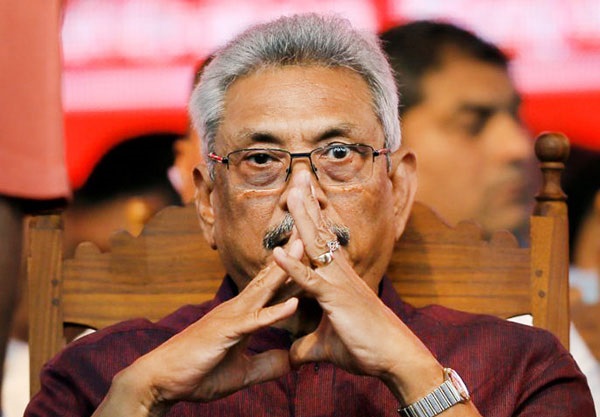
Sri Lanka's Court of Appeal has dismissed Gotabaya Rajapaksa's attempt to shield himself from arrest over the investigation into the 2019 Easter Sunday attacks, refusing even to take his petition up for hearing.
The former Sri Lankan president and acused war criminal had sought an order in June preventing his arrest and detention under the Prevention of Terrorism Act. A two-judge bench of the Court of Appeal president Justice Rohantha Abeysuriya and Justice K.M. Sarath Dissanayake dismissed the writ petition after considering submissions.
The Attorney General's Department had told the court it could not give an assurance that Rajapaksa would not be arrested, saying it required instructions from the respondents before offering any such guarantee.
The respondents named in the petition were the inspector general of police, the Criminal Investigation Department director Shani Abeysekera, the officer in charge of the Special Investigations Unit, and the Attorney General.
More than 260 people were killed in the coordinated bombings of churches and hotels on 21 April 2019, among them worshippers at St Sebastian's Church in Negombo, St Anthony's Shrine in Colombo and Zion Church in Batticaloa.
The Colombo Fort Magistrate's Court imposed a travel ban on Rajapaksa at the CID's request earlier this year. Investigators have been examining the findings of multiple reports on the attacks, and in particular the role and responsibilities of senior officials before and after the bombings.
The inquiry widened after the arrest in February of the former State Intelligence Service director Major General Suresh Sallay. Allegations aired in a Channel 4 documentary in 2023 suggested that Rajapaksa's government obstructed the investigation after taking office. Both Rajapaksa and Sallay deny any involvement.
Fifteen people were convicted over the attacks earlier this year, fourteen of them on all charges, with nine acquitted.
The ruling comes days after Rajapaksa gave evidence by video link to the Jaffna Magistrate's Court in the habeas corpus proceedings over the disappearance of the activists Lalith Kumar Weeraraj and Kugan Muruganandan, last seen in Jaffna on 9 December 2011 while he was defence secretary. Asked about the abduction of the journalist Keith Noyahr, he told the court: "I don't remember that, Your Honour." That case was adjourned to 27 November.
Last week the Attorney General decided not to indict his brother, the former Sri Lankan president Mahinda Rajapaksa, over the attack on protesters at GotaGoGama in May 2022, concluding that the evidence was insufficient. Thirty-one others will face 327 charges.
No senior figure from the Rajapaksa governments has been convicted of any offence arising from the Tamil genocide, the enforced disappearances of that period, or the Easter attacks.
Sri Lanka is one of the most dangerous places in the world to be a journalist. Tamil journalists are particularly at threat, with at least 41 media workers known to have been killed by the Sri Lankan state or its paramilitaries during and after the armed conflict.
Despite the risks, our team on the ground remain committed to providing detailed and accurate reporting of developments in the Tamil homeland, across the island and around the world, as well as providing expert analysis and insight from the Tamil point of view
Source: Tamil Guardian