Civil Society Groups Raise Concerns over Sacred Tooth Relic Casket
· Sri Lanka
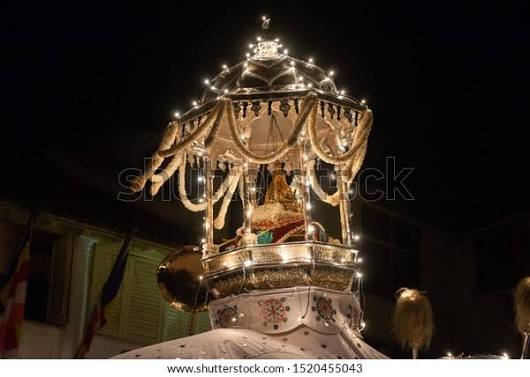
Several civil society organisations have called for the protection of Sri Lanka’s historical and religious heritage, raising concerns over controversy surrounding the casket associated with the Sacred Tooth Relic.
Speaking at a media briefing titled “Protect the Sacred Tooth Relic”, the activists objected to claims and discussions suggesting that gold-plating the casket could diminish or undermine its archaeological significance. They stressed that the historical value of religious artefacts should be safeguarded and that efforts to erase or distort the country’s history should not be tolerated.
Civil society activist Achala Divak questioned whether the casket could be treated as a commodity, asking whether it would be handed to another wealthy individual if someone offered a greater quantity of gold than the amount previously discussed.
Sanjeewa Dhammika also expressed opposition to describing the object as a “silver casket”, referring to terminology used by a senior Buddhist monk. His remarks reflected wider concerns among the speakers about how the casket and its historical significance were being represented.
Questions over the Casket’s History
Civil society activist K. Madhavan said public attention was repeatedly shifting from one controversial issue to another, pointing to the ongoing debate over the casket associated with the Temple of the Sacred Tooth Relic.
He said the activists had examined claims concerning the casket’s donation and questioned whether the account of a benefactor who presented it could be accepted without further scrutiny.
Madhavan described the Sacred Tooth Relic as a symbol of Sri Lanka’s monarchy and argued that the casket should not be treated as a possession to be transferred or controlled by a wealthy individual.
The speakers also referred to concerns about the treatment of Buddhist clergy and the robe, arguing that such matters deserved public attention.
Wider Concerns over Democracy
The briefing extended beyond cultural heritage to include criticism of government policy. One speaker referred to proposed or recently introduced legislation relating to state security and terrorism, alleging that such measures could be used to suppress democratic freedoms.
The activists called for greater scrutiny of decisions affecting religious heritage, historical artefacts and civil liberties.
The briefing highlighted the need for transparent information about the casket’s history, ownership and conservation, amid continuing public debate over its religious and archaeological significance.
Source: Serendib News