As Delhi’s air turned toxic on Diwali, 45 monitoring stations had missing readings
· India
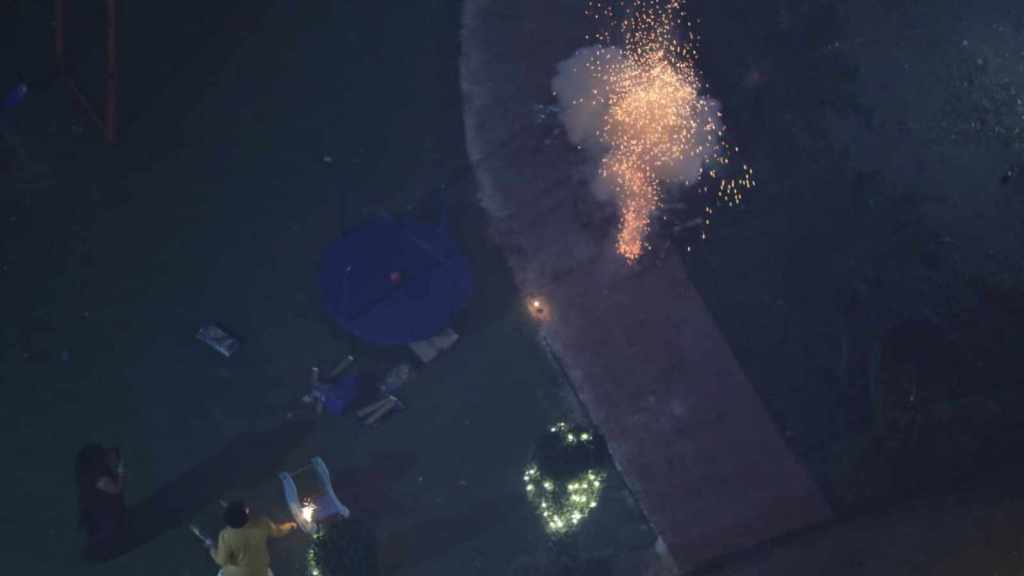
On Diwali night, 45 of the 59 monitoring stations had missing hourly readings for at least one pollutant even as the city saw its worst festival-day air quality in five years.
Of the 59 monitoring stations examined, Lodhi Road (IITM) recorded the highest number of missing readings, with 96 of the 192 expected hourly data points unavailable across all eight monitored parameters.
IIT Delhi (IITM) recorded 63 missing readings, followed by Burari Crossing (62), North Campus (55), Pusa (52) and CRRI Mathura Road (51).
PM 10 had 116 missing readings, while PM 2.5 had 55.
The gaps in particulate matter data were concentrated at stations including IIT Delhi, Burari Crossing, North Campus, Sonia Vihar, and NSUT Dwarka (formerly NSIT) for PM 10, and DTU, Burari Crossing, and NSUT Dwarka for PM 2.5.
Among individual pollutants, sulphur dioxide (SO2) had the highest number of missing hourly readings at 253, followed by ammonia (NH3) at 221.
Missing readings could mean higher pollution levels
The widespread outages during peak pollution hours stem from a combination of software clipping on central servers and physical sensor stress on the ground, as per officials.
On the Central Pollution Control Board portal, stations recorded blank hourly particulate concentrations as the particulate matter load exceeded 1,000 micrograms per cubic metre (µg/m³).
In contrast, continuous monitoring data from the Delhi Pollution Control Committee (DPCC) showed that multiple stations simultaneously recorded values well above 1,000 µg/m³ to nearly 5,000 µg/m³ during the exact hours that CPCB records showed blanks for the same stations.
For instance, DPCC dashboards captured massive midnight and post-midnight surges touching 3,744 µg/m³ at Mundka, 3,425 µg/m³ at Ashok Vihar, 4,697 µg/m³ at Punjabi Bagh, and 4,985 µg/m³ at Jahangirpuri while CPCB logs showed gaps.
But DPCC stations also experienced multi-hour data gaps, though fewer in comparison. According to station-level operators, sudden spikes in particulate pollution can trigger maintenance cycles in the DPCC CAAQM station in the optical analysers, such as filter-tape changes or inlet purging, leading to hourly data dropouts.
Manoj Kumar, lead pollution analyst at the Centre for Research on Energy and Clean Air (CREA), said a key concern was that several missing readings coincided with concentrations nearing the monitoring instruments’ upper measurement limit of 1,000 µg/m³.
He added that only 14 stations reported complete data, while the remaining 45 of Delhi’s AQI stations had at least one missing hourly observation. “Such readings should not be treated as ordinary missing data while calculating hourly or daily averages or deriving the AQI, as this could result in an underestimation of pollution levels,” he said.
“A more conservative approach would be to flag these instances as potentially exceeding the instruments’ measurement range and use 1,000 µg/m³ as a lower-bound estimate, rather than treating them as zero or excluding them from calculations…,” Kumar added.
He also said “unusually low” PM 2.5 readings below 30 µg/m³ at IGNOU Maidan Garhi, Cantonment Area, Siri Fort and Tikri Kalan during the episode needs verification for possible instrument or data-quality issues.
Experts flag extent of Diwali pollution spike
Sunil Dahiya, lead analyst and founder at think tank Envirocatalysts, said, “Diwali night, once again, showed how quickly Delhi’s air turns hazardous when firecracker smoke meets stagnant winter air… The Central Pollution Control Board’s official city average of PM 2.5 peaked at 592 µg/m³ at 1 am — almost 10 times the 24-hour standard.”
He said the real peak was higher: “Many monitors went silent after readings close to 1,000 µg/m³, the most they can record, and several stayed offline for five hours or more. Following the stations that kept reporting, we estimate the city peaked near 800 µg/m³.”
“Winds were calm, the mixing layer was barely 55 to 80 metres deep, and humidity was above 80%, so the smoke had nowhere to go. Firecrackers drove most of the spike. SO2 nearly quadrupled, and most of the rise came after the 10 pm deadline. Even at 8 am on Monday morning, PM 2.5 was still close to 350 µg/m³,” said Dahiya.
He said what happened on Diwali needs to be studied carefully and used to improve both policy and enforcement. “But the bigger problem is what lies ahead. Delhi was already breathing more than twice the safe limit before a single cracker was burst. That polluted baseline will stay with us all winter unless we cut emissions at source across sectors (transport, industry, power, waste, construction and crop residue) throughout the wider airshed, not just within Delhi’s borders,” said Dahiya.
Source: The Indian Express